


Resources
Articles
Practical guides and industry updates to help your organization stay secure and compliant in a digital-first world.

The Role of a CPA Firm in ISO 27001 Compliance Audits
The Role of a CPA Firm in ISO 27001 Compliance Audits
In today's data-driven world, the security of sensitive information is paramount. Organizations are constantly seeking ways to safeguard their data against ever-evolving cyber threats. ISO 27001, an internationally recognized information security management standard, has become a cornerstone for businesses aiming to fortify their data protection measures.
Achieving and maintaining ISO 27001 compliance is a complex process that requires meticulous attention to detail. One of the most valuable resources for businesses on this journey is a Certified Public Accountant (CPA) firm. In this blog, we will delve into the role of a CPA firm in ISO 27001 compliance audits, highlighting their expertise in information security, the benefits of engaging them, and their pivotal role in assessing risk management practices, evaluating information security controls, and providing objective and independent assessments.
The Expertise of CPA Firms in Information Security
CPA firms have long been associated with financial audits, but in today's digital age, their expertise extends beyond just financial matters. Many CPA firms now employ professionals who are well-versed in information security and possess industry-recognized certifications. These experts have a deep understanding of information security principles, technology, and best practices, which makes them a valuable resource for organizations seeking ISO 27001 compliance.
The foundation of a CPA firm's information security expertise lies in their ability to assess risks, identify vulnerabilities, and offer solutions to mitigate potential threats. Their knowledge of audit procedures and controls goes beyond numbers, encompassing data security protocols, privacy regulations, and cybersecurity frameworks.
The Benefits of Working with a CPA Firm for ISO 27001 Compliance Audits
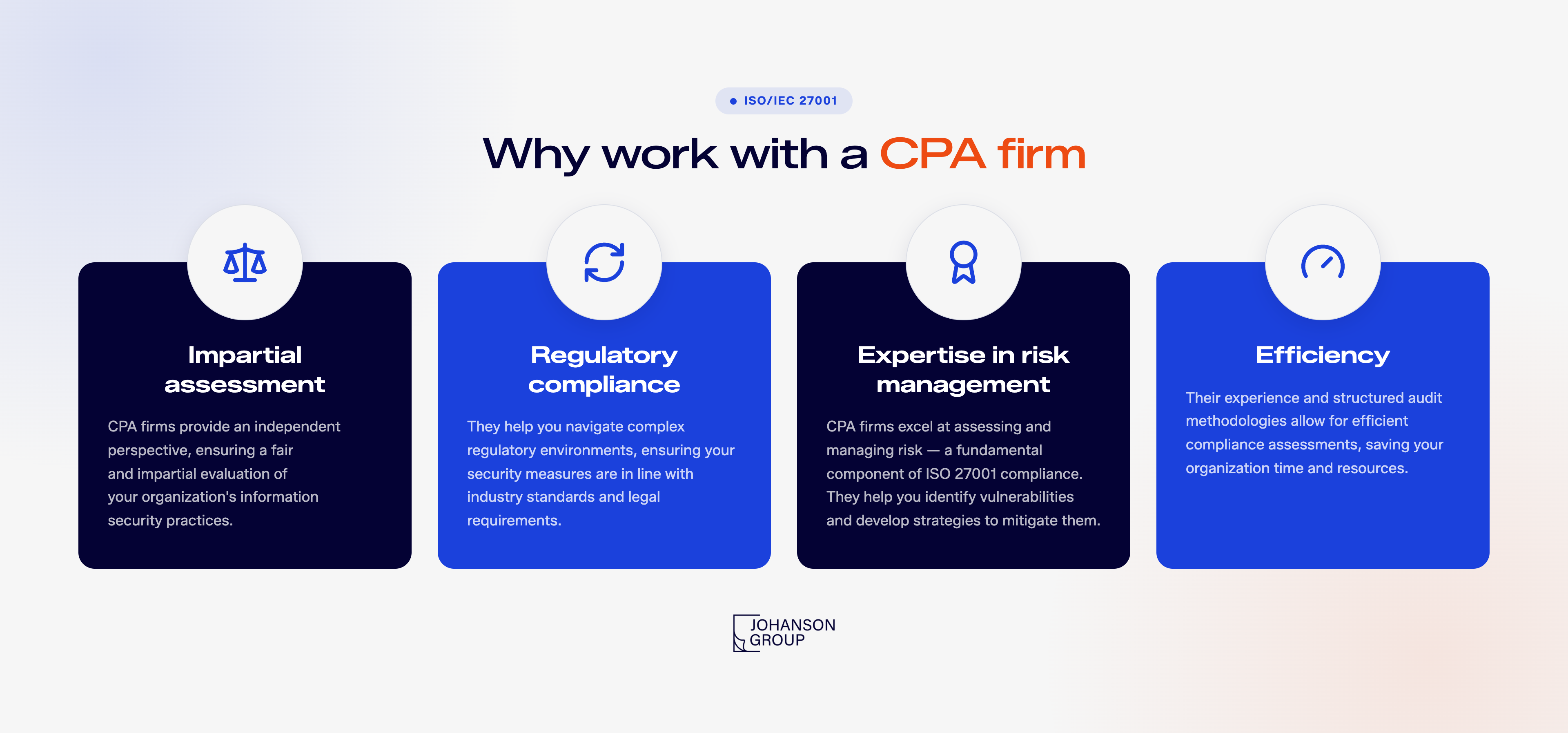
Working with a CPA firm for ISO 27001 compliance audits comes with several distinct advantages:
Assessing Risk Management Practices
One of the primary functions of a CPA firm in ISO 27001 compliance audits is to assess an organization's risk management practices. Risk management is at the heart of ISO 27001, and CPA firms bring their expertise to bear in this critical aspect. They evaluate your risk assessment processes, identify potential threats, assess their impact, and help you prioritize mitigation strategies.
By working with a CPA firm, your organization gains valuable insights into areas where security vulnerabilities may exist, allowing you to take proactive measures to address them. This comprehensive risk assessment is essential for building a robust information security management system.
Evaluating Information Security Controls
CPA firms also play a vital role in evaluating an organization's information security controls. They meticulously examine the design and effectiveness of controls in place to protect sensitive data. This evaluation includes the assessment of access controls, encryption, data classification, incident response plans, and more.
Their in-depth knowledge allows them to identify weaknesses in these controls and recommend necessary improvements. This scrutiny is crucial to ensuring that your organization's information security measures are up to par with ISO 27001 requirements and industry best practices.
READ MORE: ISO Asset Management and Cybersecurity: Protecting Your Assets in the Digital Age
Providing Objective and Independent Assessments
The objectivity and independence that CPA firms bring to ISO 27001 compliance audits are invaluable. They offer an unbiased evaluation of your organization's information security practices, highlighting both strengths and weaknesses. This impartiality ensures that the audit process is credible and trustworthy, instilling confidence in your stakeholders, including customers, partners, and regulators.
Moreover, their independence can be a significant asset when communicating audit findings and recommendations to your organization's leadership. The credibility and expertise of a CPA firm can facilitate productive discussions and expedite the implementation of necessary security improvements.
In the pursuit of ISO 27001 compliance, organizations must leverage all available resources to fortify their information security measures. Engaging a CPA firm is a strategic move, given their expertise in information security, their impartial assessments, and their ability to evaluate risk management practices and information security controls.
By partnering with Johanson Group, organizations can navigate the complex landscape of ISO 27001 compliance with confidence, ensuring the protection of their valuable data assets in today's digital world.
Developing a Robust Patch Management Policy for SOC 2 Audits
Developing a Robust Patch Management Policy for SOC 2 Audits
Patch management is a critical aspect of maintaining the security and compliance of an organization's systems. For companies undergoing a SOC 2 audit, having a well-defined and robust Patch Management Policy is crucial to meeting the requirements and demonstrating a commitment to data protection.
A Patch Management Policy outlines the procedures and protocols for identifying, testing, and implementing software updates or "patches" to address vulnerabilities and improve system performance. In this blog post, we will discuss the importance of developing a thorough Patch Management Policy for SOC 2 audits and provide tips for creating a comprehensive plan that meets industry standards.
Patch management in SOC 2 audits
When it comes to SOC 2 audits, patch management plays a vital role in demonstrating your organization's commitment to data security and regulatory compliance. SOC 2 audits are conducted to assess a company's controls related to confidentiality, integrity, privacy, and availability. Without an effective patch management policy in place, your organization may be at risk of vulnerabilities that could compromise these critical areas.
By regularly patching software vulnerabilities, you can prevent potential security breaches and ensure the integrity of your systems and data. Patch management not only reduces the risk of cyberattacks but also helps you maintain compliance with SOC 2 requirements. Properly managing patches demonstrates your organization's commitment to staying up to date with the latest security standards and mitigating potential risks.
In the following sections of this guide, we will delve deeper into the components of an effective Patch Management Policy and provide practical steps to help you develop one that meets the specific requirements of SOC 2 audits. Stay tuned for valuable insights and expert guidance to ensure your organization's patch management practices are robust and compliant.
Key components of a robust patch management policy
A robust patch management policy consists of several essential components that work together to ensure the efficiency and effectiveness of your patching process. These components include:
1. Asset Inventory: It is crucial to have a comprehensive inventory of all the assets within your organization. This includes hardware, software, and applications. An accurate asset inventory helps you identify the systems and applications that require patching.
2. Vulnerability Assessment: Conducting regular vulnerability assessments will help you identify and prioritize the vulnerabilities present in your systems and applications. These assessments can be done through automated scanning tools or by engaging the services of a cybersecurity firm.
3. Patch Prioritization: Not all vulnerabilities are equal in terms of the risk they pose to your organization. It is important to prioritize patches based on the severity of the vulnerability and the potential impact on your systems and data.
4. Patch Testing: Before applying patches to your production systems, it is crucial to perform thorough testing in a controlled environment. This helps identify any compatibility issues or unintended consequences that the patches may have on your systems.
5. Patch Deployment: The deployment of patches should be carefully planned and scheduled to minimize disruption to your organization's operations. Consider using automated patch management tools that allow for centralized deployment and monitoring of patches.
6. Patch Verification: After patches have been deployed, it is essential to verify their successful installation. Regular verification ensures that the patches have been correctly applied and are effectively addressing the identified vulnerabilities.
By incorporating these key components into your patch management policy, you can establish a robust framework that mitigates potential risks, maintains compliance with SOC 2 requirements, and safeguards your organization's systems and data.
In the next section of this guide, we will provide practical steps to help you develop each of these components and ensure your patch management policy aligns with the specific requirements of SOC 2 audits. Stay tuned for expert guidance on implementing an effective patch management policy that will strengthen your organization's data security and regulatory compliance efforts.
Developing a comprehensive patch management strategy
Developing a comprehensive patch management strategy is vital for maintaining the security and integrity of your organization's systems and data. To do this effectively, you need to consider several key factors.
First, establish clear procedures for identifying vulnerabilities and assessing the risk they pose. This involves conducting regular vulnerability assessments, either through automated scanning tools or with the help of a cybersecurity firm. By prioritizing vulnerabilities and categorizing them based on severity, you can determine which patches should be applied first.
Next, establish a well-defined patch testing process. This involves creating a controlled environment where patches can be thoroughly tested before deployment. By doing so, you can identify any compatibility issues or unintended consequences that patches may have on your systems.
Once patches have been tested, the next step is to deploy them. Careful planning and scheduling are crucial to minimize disruption to your organization's operations. Automated patch management tools can greatly simplify this process by allowing for centralized deployment and monitoring.
After patches have been deployed, it is crucial to verify their successful installation. Regular verification ensures that the patches have been correctly applied and are effectively addressing the identified vulnerabilities.
In the next section of this guide, we will dive deeper into each of these steps, providing practical guidance on developing each component of your patch management strategy. Stay tuned for expert advice on implementing an effective patch management policy that ensures compliance with SOC 2 audits and safeguards your organization's systems and data.
Implementing an effective patch deployment process
Implementing an effective patch deployment process is a critical aspect of your organization's patch management strategy. This section will provide practical guidance on how to successfully execute this step.
Start by creating a patch deployment plan that outlines the necessary steps and timelines for each deployment. This plan should include considerations such as system dependencies and potential risks associated with specific patches. By considering these factors upfront, you can reduce the chances of disruptions to your organization's operations.
Utilize automated patch management tools to streamline the deployment process. These tools allow for centralized deployment, ensuring consistency and reducing the chance of human error. They also provide real-time monitoring capabilities, allowing you to track the progress of each deployment and take immediate action if any issues arise.
Before deploying patches, it is recommended to schedule a maintenance window to minimize any potential impact on your organization's daily operations. Inform stakeholders about this schedule well in advance and ensure that they understand the importance of timely patch deployments.
Once the patches have been deployed, conduct thorough post-deployment testing to verify their successful installation. This step is crucial for ensuring that the patches have been applied correctly and are effectively addressing the identified vulnerabilities.
Monitoring and assessing the effectiveness of your patch management efforts
In order to maintain a robust patch management strategy for SOC 2 audits, it is crucial to continuously monitor and assess the effectiveness of your patch management efforts. This section will provide insights and best practices on how to stay proactive in ensuring the security and integrity of your systems.
Regularly monitor your patching process to identify any potential gaps or vulnerabilities. This can be done by conducting routine vulnerability assessments and penetration testing. By doing so, you can identify any vulnerabilities that may have been missed during the patch deployment process and address them promptly.
Implement a robust reporting mechanism to track the success of your patch management efforts. This should include metrics such as the number of patches deployed, patch compliance rates, and the number of vulnerabilities resolved. Regularly review these metrics to gauge the effectiveness of your patching process and make necessary improvements.
Stay informed about the latest security threats and vulnerabilities by subscribing to relevant security newsletters, forums, and industry blogs. This will enable you to be proactive in identifying emerging threats and promptly applying the necessary patches.
Lastly, ensure that your patch management process is aligned with industry best practices and compliance standards. Regularly review and update your patch management policy to stay in line with the changing threat landscape and regulatory requirements.
Maintaining the security and compliance of your organization's systems is paramount. This policy ensures that vulnerabilities are addressed promptly through timely patching, reducing the risk of potential security breaches.
By implementing key components such as inventory and asset management, vulnerability assessments, patch testing, change management, and patch deployment and tracking, you can establish a strong foundation for effective patch management. These components ensure that your patch management processes are efficient, compliant, and aligned with industry best practices.
To achieve continuous improvement, stay updated on industry standards and best practices, leverage automation and technology, and foster a culture of feedback and accountability within your organization.
By following these guidelines and continuously evaluating and refining your patch management processes, you can maintain the security and compliance of your systems, meet SOC 2 requirements, and demonstrate your commitment to data protection.
Information Security Audits: An Overview of Different Types
Information Security Audits: An Overview of Different Types
Information security audits are a critical component of any successful security program. They help to identify potential risks, compliance issues, and vulnerabilities that can impact an organization's ability to protect its data and operations. A comprehensive audit should include different types of assessments, including a compliance audit. Compliance audits measure an organization's adherence to legal, regulatory, and industry standards. In this blog post, we'll explore the different types of audits that should be considered for a comprehensive information security audit.
What is an Information Security Audit?
An information security audit is a systematic examination and evaluation of an organization's information security policies, procedures, and controls. It aims to identify potential vulnerabilities, risks, and weaknesses in the organization's information security practices. This audit provides an in-depth analysis of the organization's security posture and helps identify areas where improvements can be made.
The purpose of an information security audit is to ensure that the organization's information assets are protected from unauthorized access, alteration, or destruction. It involves reviewing the organization's security policies, conducting interviews with key personnel, and assessing the effectiveness of the implemented security controls.
By conducting an information security audit, organizations can identify potential security gaps and take corrective actions to strengthen their overall security posture. This is especially important for CFOs, as financial risks and compliance issues can have a significant impact on an organization's financial health and stability.
Types of Information Security Audits
When conducting a comprehensive information security audit, it's important to consider the different types of audits that can provide a holistic assessment of your organization's security posture. These audits include internal audits, external audits, compliance audits, and risk assessments.
Internal audits are conducted by internal teams within the organization and focus on assessing the effectiveness of internal controls, policies, and procedures. These audits provide an opportunity to identify vulnerabilities or weaknesses in the organization's security practices and make necessary improvements.
External audits, on the other hand, are conducted by third-party experts who have no bias or vested interest in the organization. They provide an unbiased assessment of the organization's security practices and can identify blind spots that may have been overlooked.
Compliance audits measure an organization's adherence to legal, regulatory, and industry standards. These audits ensure that the organization is meeting all necessary requirements and help mitigate legal and financial risks associated with non-compliance.
Lastly, risk assessments are conducted to identify potential risks and vulnerabilities that may impact the organization's ability to protect its data and operations. These assessments help prioritize security investments and allocate resources effectively.
By incorporating these different types of audits into your information security program, you can gain a comprehensive understanding of your organization's security posture and make informed decisions to strengthen your overall security.
Internal Audits
Internal audits are a vital component of a comprehensive information security audit. These audits are conducted by internal teams within the organization and focus on assessing the effectiveness of internal controls, policies, and procedures. They provide a valuable opportunity to identify vulnerabilities or weaknesses in the organization's security practices and make necessary improvements.
One of the key advantages of internal audits is that they allow organizations to have a deep understanding of their own security posture. Internal auditors have a unique perspective as they are familiar with the organization's structure, processes, and systems. This allows them to identify potential risks and weaknesses that may have been overlooked by external auditors.
Internal audits also provide the opportunity for ongoing monitoring and improvement of security practices. By conducting regular internal audits, organizations can ensure that security controls and policies are being implemented effectively and are aligned with industry best practices.
External Audits
External audits are a crucial component of a comprehensive information security audit. These audits are conducted by third-party experts who have no bias or vested interest in the organization. They provide an unbiased assessment of the organization's security practices and can identify blind spots that may have been overlooked.
External audits are essential for organizations as they bring an objective perspective to the security assessment. These auditors have expertise in information security and can identify vulnerabilities and risks that internal teams may not have noticed. Their unbiased assessment helps organizations gain a holistic understanding of their security posture.
For CFOs, external audits are particularly valuable as they provide an independent validation of the organization's financial risks and compliance issues. By conducting external audits, CFOs can ensure accurate and transparent financial reporting, reducing the risk of non-compliance penalties and reputational damage.
External audits also help organizations demonstrate their commitment to security and compliance to stakeholders such as customers, investors, and regulatory bodies. It provides assurance that the organization is proactively managing its information security risks and complying with relevant regulations.
Overall, external audits play a critical role in enhancing an organization's information security program, strengthening its security posture, and instilling confidence among stakeholders.
Compliance Audits
Compliance audits are a critical component of a comprehensive information security audit. They ensure that an organization is meeting legal, regulatory, and industry standards. For CFOs, compliance audits are especially important as they help identify financial risks and ensure accurate financial reporting.
Compliance audits provide organizations with a thorough review of their practices, policies, and controls to ensure compliance with relevant regulations. This includes assessing data protection measures, access controls, incident response plans, and documentation of security policies.
By conducting compliance audits, organizations can proactively identify areas of non-compliance and take corrective actions to mitigate financial risks. This includes avoiding penalties, reputational damage, and potential legal ramifications.
Additionally, compliance audits demonstrate an organization's commitment to protecting sensitive information and maintaining regulatory compliance. This can help build trust and confidence among customers, investors, and regulatory bodies.
Risk Assessments
Risk assessments are a crucial component of a comprehensive information security audit. They help organizations identify potential risks and vulnerabilities that may impact their ability to protect their data and operations. By conducting risk assessments, organizations can prioritize security investments and allocate resources effectively.
For CFOs, risk assessments are particularly important as they provide insight into financial risks and compliance issues. By identifying potential risks, CFOs can take proactive measures to mitigate these risks and ensure accurate and timely financial reporting. Risk assessments also help CFOs demonstrate due diligence in managing financial risks and complying with relevant regulations.
To conduct effective risk assessments, organizations should consider factors such as the likelihood and impact of potential risks, existing security controls, and the organization's risk tolerance. By incorporating risk assessments into their information security program, organizations can stay ahead of emerging threats and protect their sensitive data.
Importance of Regular Audits:
Regular audits are crucial for maintaining the effectiveness of an organization's information security program. As threats evolve and new vulnerabilities emerge, regular audits help to ensure that security controls and practices are up to date and effective in mitigating risks.
Regular audits also provide an opportunity to identify any gaps or weaknesses in the organization's security posture. By conducting audits on a regular basis, organizations can identify potential vulnerabilities before they are exploited by malicious actors, reducing the risk of data breaches or other security incidents.
Additionally, regular audits help to demonstrate an organization's commitment to maintaining a strong security posture. By regularly assessing and improving security practices, organizations can instill confidence in customers, investors, and regulatory bodies that they are taking the necessary steps to protect sensitive information.
For CFOs, regular audits are particularly important as they help to identify and mitigate financial risks and compliance issues. By conducting regular audits, CFOs can ensure accurate and timely financial reporting, reducing the risk of non-compliance penalties and reputational damage.
Best Practices for Conducting Information Security Audits:
When it comes to conducting information security audits, there are some best practices that organizations should follow to ensure a thorough and effective assessment. These best practices can help organizations maximize the value of their audits and improve their overall security posture.
Firstly, it's important to establish clear objectives and scope for the audit. This includes defining what aspects of the organization's information security practices will be assessed and what specific goals the audit aims to achieve. By setting clear objectives, organizations can ensure that the audit focuses on the areas that are most critical to their security.
Secondly, organizations should conduct regular audits on a consistent basis. This helps to ensure that security controls and practices are up to date and effective in mitigating risks. Regular audits also provide an opportunity to identify any new vulnerabilities or weaknesses that may have emerged since the last audit.
Thirdly, organizations should involve key stakeholders in the audit process. This includes individuals from various departments such as IT, finance, legal, and compliance. By involving stakeholders from different areas of the organization, organizations can gain a comprehensive understanding of their security posture and ensure that all relevant areas are assessed.
Additionally, it's important to leverage the expertise of external auditors. External auditors bring an objective perspective and can identify blind spots that may have been overlooked by internal teams. Organizations should select auditors with relevant experience and expertise in information security to ensure a thorough and unbiased assessment.
Furthermore, organizations should prioritize the remediation of identified vulnerabilities and weaknesses. It's not enough to simply identify areas of improvement - organizations must take action to address these issues and strengthen their security controls. By prioritizing remediation efforts, organizations can effectively allocate resources and mitigate potential risks.
Lastly, organizations should ensure that audit findings are documented and communicated effectively. This includes preparing a comprehensive report that outlines the audit findings, recommendations, and action plans. The report should be shared with relevant stakeholders and used as a guide for implementing necessary improvements.
Cost Considerations for Conducting Information Security Audits:
As CFOs, it is important to consider the cost implications of conducting information security audits. While the benefits of these audits are undeniable, it is crucial to balance the costs associated with them. The cost of an information security audit can vary depending on factors such as the scope of the audit, the size of the organization, and the expertise required.
It is important to allocate a sufficient budget for information security audits as they play a vital role in protecting the organization's sensitive data and maintaining compliance with relevant regulations. The cost of audits should be viewed as an investment in the organization's security and overall financial health.
To minimize costs, organizations can consider leveraging internal resources and expertise where possible. This can help reduce the reliance on external auditors, which may be more costly. Additionally, organizations can prioritize the most critical areas of the audit to focus on, ensuring that resources are allocated effectively.
Conclusion
In today's ever-evolving digital landscape, information security audits are a vital tool for organizations to protect their sensitive data, maintain compliance with regulations, and mitigate potential risks. By conducting a comprehensive information security audit, organizations can gain a holistic understanding of their security posture and make informed decisions to strengthen their overall security.
Through various types of audits, including internal audits, external audits, compliance audits, and risk assessments, organizations can assess the effectiveness of their security controls, policies, and procedures. Internal audits provide an in-depth analysis of the organization's security practices, leveraging the internal team's knowledge and perspective. External audits bring an objective and unbiased assessment from third-party experts. Compliance audits ensure adherence to legal and industry standards, while risk assessments identify potential vulnerabilities and risks.
Regular audits are essential to keep up with evolving threats and maintain an effective security program. By following best practices, organizations can maximize the value of audits and improve their security posture. While cost considerations are important, the investment in information security audits is crucial for the organization's financial health and stability.
SOC 2 and HIPAA Compliance: Similarities and Differences
SOC 2 and HIPAA Compliance: Similarities and Differences
Data security and privacy are top concerns for businesses and consumers alike. With the rise of cyber attacks and data breaches, companies are under increasing pressure to ensure the safety and protection of their customers’ sensitive information. Two common compliance frameworks that address these concerns are SOC 2 and HIPAA. While both focus on data security and privacy, they have different requirements and target different industries. In this article, we’ll explore the similarities and differences between SOC 2 compliance and HIPAA compliance.
What is SOC 2 Compliance?
SOC 2 (Service Organization Control 2) is a compliance framework developed by the American Institute of Certified Public Accountants (AICPA). It is designed to ensure that service organizations have the necessary controls in place to protect the security, availability, processing integrity, confidentiality, and privacy of customer data.
SOC 2 compliance is often required by companies that provide services to other businesses, such as SaaS (Software as a Service) companies, data centers, and IT service providers. It is also becoming increasingly important for companies that handle sensitive customer data, such as healthcare organizations and financial institutions.
Requirements for SOC 2 Compliance
To achieve SOC 2 compliance, companies must undergo a rigorous audit by a third-party auditor. The audit evaluates the company’s controls and processes related to security, availability, processing integrity, confidentiality, and privacy.
The five trust service categories that are evaluated in a SOC 2 audit are:
- Security: The protection of the system against unauthorized access, use, or modification.
- Availability: The system is available for operation and use as committed or agreed.
- Processing Integrity: System processing is complete, accurate, timely, and authorized.
- Confidentiality: Information designated as confidential is protected as committed or agreed.
- Privacy: Personal information is collected, used, retained, disclosed, and disposed of in conformity with the commitments in the entity’s privacy notice and with criteria set forth in generally accepted privacy principles issued by the AICPA and CICA.
What is HIPAA Compliance?
Overview of HIPAA
HIPAA (Health Insurance Portability and Accountability Act) is a federal law that sets standards for the protection of sensitive patient information. It applies to healthcare providers, health plans, and healthcare clearinghouses, as well as any business associates that handle protected health information (PHI) on their behalf.
HIPAA compliance is essential for healthcare organizations to ensure the confidentiality, integrity, and availability of PHI. It also helps to protect against unauthorized access, use, or disclosure of PHI.
Requirements for HIPAA Compliance
To achieve HIPAA compliance, healthcare organizations must comply with the HIPAA Privacy Rule, Security Rule, and Breach Notification Rule. These rules outline the requirements for protecting PHI and responding to data breaches.
The HIPAA Privacy Rule sets standards for the use and disclosure of PHI, while the Security Rule establishes standards for the security of electronic PHI (ePHI). The Breach Notification Rule requires organizations to notify affected individuals, the Department of Health and Human Services, and in some cases, the media, in the event of a data breach.
Differences Between SOC 2 and HIPAA Compliance
While there are some similarities between SOC 2 and HIPAA compliance, there are also significant differences that organizations should be aware of.
Target Industries
One of the main differences between SOC 2 and HIPAA compliance is the target industries. SOC 2 compliance is primarily targeted towards service organizations, while HIPAA compliance is focused on healthcare organizations.
Scope of Compliance
SOC 2 compliance has a broader scope than HIPAA compliance. While HIPAA compliance focuses on the protection of PHI, SOC 2 compliance covers a wider range of data, including financial data, customer data, and intellectual property.
Requirements for Compliance
The requirements for SOC 2 and HIPAA compliance also differ. SOC 2 compliance has five trust service categories that organizations must meet, while HIPAA compliance has three rules (Privacy, Security, and Breach Notification) that organizations must comply with.
Similarities Between SOC 2 and HIPAA Compliance
While SOC 2 and HIPAA compliance have different origins and target different industries, there are some similarities between the two frameworks.
Focus on Data Security and Privacy
Both SOC 2 and HIPAA compliance have a strong focus on data security and privacy. They both require organizations to have controls in place to protect sensitive information from unauthorized access, use, or disclosure.
Third-Party Audits
Both SOC 2 and HIPAA compliance require organizations to undergo third-party audits to assess their compliance. These audits are conducted by independent auditors who evaluate the organization’s controls and processes to ensure they meet the requirements of the respective framework.
Ongoing Compliance
Both SOC 2 and HIPAA compliance are ongoing processes. Organizations must continuously monitor and update their controls and processes to maintain compliance and address any changes in the regulatory landscape.
Achieving Compliance: Best Practices
Regardless of whether your organization needs to comply with SOC 2 or HIPAA, there are some best practices that can help you achieve and maintain compliance.
Conduct a Risk Assessment
Before beginning the compliance process, it’s essential to conduct a risk assessment to identify potential vulnerabilities and risks to your organization’s data. This will help you determine which controls and processes are necessary to mitigate these risks and achieve compliance.
Implement Strong Security Measures
Both SOC 2 and HIPAA compliance require organizations to have strong security measures in place to protect sensitive data. This includes implementing firewalls, encryption, access controls, and regular security updates.
Train Employees on Compliance
Employees play a crucial role in maintaining compliance. It’s essential to train employees on the requirements of SOC 2 or HIPAA compliance and their role in protecting sensitive data. This includes training on data security best practices, such as password protection and data handling procedures.
Regularly Monitor and Update Controls
Compliance is an ongoing process, and it’s essential to regularly monitor and update your controls and processes to maintain compliance. This includes conducting regular audits and risk assessments to identify any potential vulnerabilities and address them promptly.
SOC 2 and HIPAA compliance are two frameworks that help organizations protect sensitive data and maintain compliance. While they have some similarities, they also have significant differences that organizations should be aware of. By following best practices and regularly monitoring and updating controls, organizations can achieve and maintain compliance with these frameworks and ensure the safety and protection of their customers’ sensitive information.
Ready to enhance your compliance journey?
Contact Johanson Group today to explore our risk management reporting, assessments, and auditing expertise. Whether you're aiming for HIPAA or SOC 2 compliance, we're here to help you achieve excellence in data security and regulatory adherence.

What is a ISO 27001 Surveillance Audit?
What is a ISO 27001 Surveillance Audit?
Organizations are continually challenged to protect their sensitive data and ensure compliance with international standards. Among these standards, ISO 27001 stands out as a beacon of best practices for information security management systems (ISMS). But how do organizations ensure that their commitment to ISO 27001 standards remains unwavering over time? The answer lies in a ISO 27001 surveillance audit.
ISO 27001 Surveillance Audits— The Basics
These ISO 27001 surveillance audits are not isolated events; instead, they are part of a continuous evaluation process. Their primary purpose is to confirm that an organization is still aligning with ISO standards, ensuring that information security remains a top priority.
ISO standards, whether it's ISO 9001 for quality management or ISO 27001 for information security, require organizations to undergo certification audits initially.
After receiving certification, that’s when surveillance audits come into play, keeping organizations accountable to their commitment to these standards.
When and How Often Should ISO 27001 Surveillance Audits Be Done?
Surveillance audits operate on a specific schedule. Typically, they are conducted the year following an organization's initial ISO certification and continue annually thereafter. Some organizations, based on their unique business requirements, may opt for semi-annual surveillance audits.
These audits are essential to maintain the validity of the certification, and they ensure that the organization's management system remains functional and aligned with ISO requirements.
Benefits of Surveillance Audits for Organizations
In this section, we'll explore the manifold advantages that surveillance audits bring to organizations committed to ISO 27001 compliance. These audits are not merely a regulatory necessity; they are strategic tools that help organizations enhance their information security practices, mitigate risks, and foster a culture of continuous improvement.
Ensuring Sustained Compliance

Surveillance audits hold immense importance in the realm of ISO compliance. Their role cannot be understated, as they serve as vigilant guardians of an organization's commitment to adhering to ISO standards. These audits, conducted at regular intervals, play a pivotal role in assessing and confirming an organization's ongoing compliance with these critical standards. In essence, they act as a crucial checkpoint in the journey towards maintaining the highest standards of information security and ensuring that an organization's practices align with ISO 27001 requirements.
Identifying Potential Risks
Surveillance audits are thorough examinations that cover multiple aspects of an organization, such as key processes, incident prevention and response, internal auditing, and non-compliance areas. This in-depth review aids organizations in spotting potential risks and areas requiring enhancement.
Driving Continuous Improvement
ISO 27001 surveillance audits go beyond mere compliance checks. They encourage a culture of continuous improvement. By addressing non-conformities identified in previous audits, organizations can refine their information security management systems and enhance their overall security posture.
Key Components of an ISO 27001 Surveillance Audit
Maintaining ISO 27001 compliance is an ongoing commitment in the ever-evolving landscape of information security. To ensure that your information security management system (ISMS) remains robust and aligned with ISO standards, surveillance audits play a pivotal role.
In this section, we will break down the key components of an ISO 27001 surveillance audit, shedding light on what organizations can anticipate during this critical evaluation.
Scoping and Planning
The journey of a surveillance audit begins with meticulous scoping and planning. During this phase, auditors carefully outline the specific areas they will review throughout the audit process. These areas encompass various aspects of information security, including:
Risk Assessment: Auditors assess how effectively your organization identifies and manages information security risks.
Control Implementation
The implementation of information security controls is scrutinized to ensure they align with ISO 27001 requirements.
Incident Management
Auditors evaluate the incident management procedures in place to respond effectively to security incidents and breaches.
Continuous Improvement Processes
The effectiveness of processes aimed at continually improving your ISMS is a focal point, as ISO 27001 encourages a culture of continuous enhancement.
Areas Under the Microscope
Once the scoping and planning phase is complete, the audit proceeds to the heart of the matter. Auditors delve deep into your organization's operations, assessing various facets of your information security management system.
Areas under scrutiny include:
- Management Reviews: Auditors assess the effectiveness of your organization's management reviews, ensuring they align with ISO standards and contribute to the enhancement of the ISMS.
- Preventive and Corrective Actions: The audit evaluates the processes in place for preventing security incidents and responding to them promptly and effectively when they occur.
- Internal Auditing Processes: The effectiveness of your internal auditing processes is examined to verify that they align with ISO 27001 requirements.
- Implementation of Recommendations: Any recommendations stemming from previous internal audits are reviewed to ensure they have been implemented effectively and have contributed to strengthening the ISMS.
Conclusion
In conclusion, surveillance audits are the unsung heroes of ISO 27001 compliance. They ensure that organizations don't merely achieve ISO certification but also maintain it through ongoing commitment and improvement. These audits act as a safety net, safeguarding sensitive data and bolstering an organization's reputation for information security.
We encourage organizations to prioritize surveillance audits as a vital tool for continuous monitoring and enhancement of their information security practices. By doing so, they can protect their critical assets, mitigate risks, and thrive in an increasingly interconnected digital world.
Remember, in the realm of ISO 27001 compliance, vigilance is key, and surveillance audits are your trusted allies.
Partner with Johanson Group for ISO 27001 Success
Ready to navigate the ISO 27001 process, including surveillance audits, with confidence?
Let Johanson Group be your trusted partner on this journey. We bring expertise and experience to ensure your organization not only achieves ISO certification but maintains it with excellence.
Contact us today to safeguard your data, enhance your security practices, and thrive in the digital world.
%20Compliance%20Guide_converted.avif)

PCI Compliance Guide
Discover everything you need to know about PCI compliance, including compliance levels, benefits, a PCI 4.0 checklist, and the difference between compliance and certification. Learn why Johanson Group is your trusted partner for PCI compliance solutions.
PCI Compliance Levels
PCI compliance is categorized into four levels based on the volume of credit card transactions processed annually:
- Level 1: Over 6 million transactions per year.
- Level 2: Between 1 million and 6 million transactions per year.
- Level 3: Between 20,000 and 1 million e-commerce transactions per year.
- Level 4: Fewer than 20,000 e-commerce transactions or up to 1 million total transactions annually.
Each level has its own specific requirements and validation processes, with Level 1 being the most stringent.
Who Needs PCI Compliance?
Any business that processes, stores, or transmits credit card information must comply with PCI DSS. This includes merchants, financial institutions, payment processors, and service providers. Non-compliance can result in hefty fines, increased transaction fees, and damage to reputation.
What are the Benefits of PCI Compliance?
Achieving PCI compliance offers numerous benefits, including:
- Enhanced Security: Protects sensitive cardholder data from breaches and fraud.
- Customer Trust: Builds confidence with customers knowing their information is secure.
- Avoid Penalties: Prevents costly fines and penalties associated with non-compliance.
- Operational Efficiency: Encourages the adoption of best security practices, improving overall business processes.
PCI Compliance vs. Certification
While PCI compliance means adhering to the PCI DSS requirements, PCI certification involves a formal assessment by a qualified security assessor (QSA) to validate compliance.
- PCI Compliance: An ongoing process where businesses ensure they meet the PCI DSS standards. This includes self-assessment questionnaires and regular security checks.
- PCI Certification: A formal certification process where a QSA conducts a thorough audit and provides a Report on Compliance (ROC) if the business meets all requirements.
Certification can provide additional assurance to stakeholders, but the primary goal is always to maintain compliance to protect cardholder data effectively.
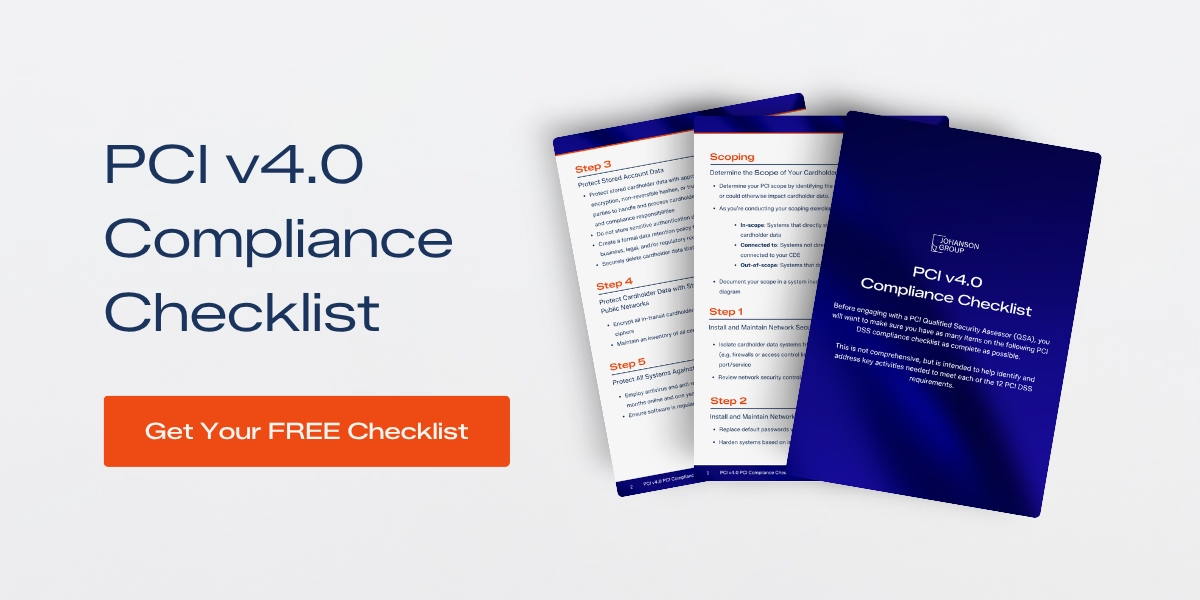
PCI 4.0 Compliance Checklist
Before engaging with a PCI Qualified Security Assessor (QSA), you will want to make sure you have as many items on the following PCI DSS compliance checklist complete as possible. PCI DSS version 4.0 introduces several updates to enhance payment data security.
Choose Johanson Group for PCI Compliance
When it comes to PCI compliance, the Johanson Group stands out as a trusted partner. With a dedicated team of experts, including our new Director of PCI services, Anthony Fulda, we offer comprehensive compliance solutions tailored to your business needs. Our services include:
- Detailed risk assessments and gap analyses
- Implementation of robust security measures
- Ongoing monitoring and support
- Assistance with PCI DSS validation and certification
Partnering with Johanson Group ensures that your business meets the highest standards of payment data security, giving you peace of mind and a competitive edge in the market. Contact us today to learn more about our PCI compliance services and how we can help secure your payment processes.
Services


