


Resources
Articles
Practical guides and industry updates to help your organization stay secure and compliant in a digital-first world.

The Importance of ISO 27001 Certification for SaaS Providers
The Importance of ISO 27001 Certification for SaaS Providers
If you’re a part of the Software as a Service (SaaS) industry, then you know ensuring robust security measures is paramount.
ISO/IEC 27001 certification represents a transformative step in the world of SaaS security, surpassing fundamental measures like firewalls and antivirus software. It directs providers to create a comprehensive security framework that serves as the blueprint for an unshakable security fortress.
In this blog post, we will explore the concrete benefits that ISO/IEC 27001 certification offers to SaaS providers and why it has become an industry standard.
ISO/IEC 27001: The Crucial Standard for SaaS
ISO/IEC 27001, established in the early 2000s, has become the global gold standard for information security. It specifically caters to the critical needs of SaaS providers entrusted with sensitive data.
In 2021, the International Organization for Standardization (ISO) reported that over 38,000 organizations in 162 countries had successfully attained ISO/IEC 27001 certification. This standard is highly regarded for its flexibility, worldwide recognition, and its commitment to instilling customer confidence.
Now, let's delve into why numerous organizations place their trust in ISO 27001 standards, offering three distinct advantages:
- Increased Trust and Credibility: ISO 27001 certification enhances trust and credibility, bolstering an organization's reputation for safeguarding sensitive information.
- Enhanced Security Measures: This certification promotes heightened security measures, going beyond the basics to establish a comprehensive security framework.
- Competitive Advantage: ISO 27001 certification grants a competitive edge, allowing organizations to stand out in a crowded marketplace.
Before we delve into the top three benefits of ISO 27001 certification for SaaS companies, let's first understand the practical reasons why this certification is an absolute must in today's digital landscape and the consequences of not doing so.
Why ISO Certification for SaaS? Real-World Reasons and Benefits
In the fast-paced world of Software as a Service (SaaS), ensuring robust security measures is paramount. The global landscape of cybersecurity threats is evolving, and with it, the need for proactive security strategies.
Real-world statistics from 2023, compiled by GITNUX Market Data, paint a compelling picture of the challenges and opportunities in this industry:
Soaring Costs of Data Breaches
The global average cost of a data breach in 2023 reached a staggering USD 4.45 million, representing a 15% increase over three years. This eye-popping figure underscores the financial impact of inadequate security measures.
ISO 27001 certification provides a fortified defense against breaches, potentially saving millions in damage control costs.
Increasing Security Investments
In response to the growing threat of data breaches, 51% of organizations are planning to increase their security investments. These investments encompass incident response planning, employee training, threat detection, and response tools.
ISO 27001 certification not only demonstrates commitment to security but also aligns with this industry trend of heightened security investment.
Booming SaaS Market
The SaaS market is booming, with a worth exceeding $195 billion in 2023. As the SaaS industry continues to flourish, the importance of robust security practices cannot be overstated.
ISO 27001 certification sets SaaS companies apart, offering a competitive edge in a thriving market.
Prevalence of SaaS Adoption
A substantial 53% of organizations have already implemented SaaS, with an additional 28% planning to do so in the near future. Surveys reveal that 96% of companies are using at least one SaaS application, with 78% utilizing more than four.
As SaaS becomes integral to business operations, ISO 27001 certification ensures that sensitive data remains secure in the cloud.
Venture Capital Funding
SaaS companies have been a magnet for venture capital funding, having raised more than $2 billion since 2015. Investors recognize the potential of SaaS, but they also demand a solid security foundation.
ISO 27001 certification not only safeguards data but also instills confidence in investors.
Revenue Generation
Most SaaS companies generate between $100,000 and $5 million annually.
Protecting this revenue stream is crucial, and ISO 27001 certification demonstrates a commitment to data security, earning trust from both customers and investors.
Cost-Effective Solutions
SaaS solutions are known for cost-effectiveness, with businesses saving $1.50 for every dollar spent on such solutions.
Benefit #1: The Trust-Building Power of ISO 27001 Certification
The ISO/IEC 27001 certification stands as a shining beacon of trust and credibility within the ever-evolving landscape of the technology industry.
It is a symbol that holds immense significance, representing a SaaS provider's commitment and unwavering dedication to fortifying their security measures.
This ISO certification for SaaS goes far beyond mere superficial claims of security. It offers a meticulously crafted and internationally validated framework. This makes the framework a strong backbone in digital trust-building.
Here's how ISO/IEC 27001 certification helps achieve trust-building:
Proven Best Practices
ISO/IEC 27001 is more than just words; it's a roadmap for SaaS providers to follow global best practices in information security. It proves that the organization doesn't just discuss security; it protects sensitive data.
Third-Party Validation
ISO/IEC 27001 certification is special because it undergoes independent third-party audits, not self-assessment. This external validation enhances credibility, assuring clients and stakeholders that an impartial authority has verified the organization's effective security controls.
Benefit #2: Enhanced Security Measures with ISO 27001 Certification for SaaS Companies
ISO/IEC 27001 certification takes security measures to a higher level, transcending basic tools like firewalls and antivirus software.
It prompts SaaS providers to establish a comprehensive security management system, serving as a robust cornerstone for safeguarding sensitive data.
Remember, this certification isn't merely about securing a stamp of approval; it's about constructing and maintaining a fortified security framework.
ISO/IEC 27001 represents a strategic investment by SaaS providers in a resilient security framework. It not only protects your clients' data but also significantly reduces the risk of costly security breaches that could tarnish your company's reputation.
Here's how ISO/IEC 27001 enhances security measures for SaaS businesses:
Comprehensive Controls
ISO 27001 establishes a robust framework with well-defined policies, procedures, and technical safeguards, including access controls, encryption, incident response plans, and continuous monitoring.
Holistic Security Management System
This certification encourages a company-wide security approach, integrating security into every aspect, from employee training and awareness to vendor management and third-party assessments, fostering a security-centric culture within the organization.
Customer Data Protection
ISO 27001 puts customer data protection first, which is crucial for SaaS businesses. It guarantees strong data protection measures like data classification, retention policies, and secure data handling. This not only protects customer data but also ensures compliance with privacy regulations like GDPR or CCPA.

In the fiercely competitive landscape of the SaaS industry, gaining a competitive edge is paramount.ISO 27001, a globally recognized standard for information security management, offers a risk-based approach that can significantly enhance a SaaS company's competitive position.
Here's how ISO 27001 certification can provide a distinct competitive advantage to SaaS organizations:
Strong Information Security Foundation
ISO 27001 serves as the bedrock for robust information security. By adopting this standard, SaaS companies establish a solid information security foundation, emphasizing their commitment to safeguarding data and their risk management approach. This sends a powerful message to customers, partners, and stakeholders about the seriousness with which they take their responsibilities.
Proactive Data Protection
ISO 27001 compliance demonstrates a proactive stance in protecting sensitive information. SaaS companies show dedication to maintaining the highest security standards, instilling confidence in customers who trust that their data is handled securely and responsibly.
Staying Current with Security Standards
ISO 27001 ensures that SaaS companies are in tune with the latest security standards. This ongoing commitment to best practices and continuous improvement enables businesses to ward off potential threats and safeguard their information assets effectively.
Comprehensive Risk Management
ISO 27001 provides a comprehensive framework for managing cyber risk. It covers everything from risk assessment to policy development to employee training and awareness. By adopting this framework, SaaS organizations gain a better understanding of their information security risks, empowering them to protect critical assets from cyber threats more effectively.
Choose ISO Certification for Your SaaS Organization
By prioritizing ISO/IEC 27001 certification, SaaS companies can strengthen their security posture, build trust among their customers and stakeholders, and differentiate themselves in a crowded marketplace.
Elevate Your SaaS Security with ISO/IEC 27001 Certification from Johanson Group
Seamlessly attain compliance, proactively mitigate risks, and safeguard your data with unwavering confidence.
Secure Success with Johanson Group's ISO/IEC 27001 Certification
Determining the Scope Statement
Don't leave information security to chance - determine the ISO 27001 scope statement that works best for you. Read our expert analysis now.
The ISO 27001 scope statement is one of the first steps for building your ISMS. Although it is just a short separate document or small paragraph in your security policy, it is one of the most important aspects of the certification. The scope statement is defined in the ISO/IEC 27001:2013 under section 4. It shortly describes the purpose or context of your organization and what processes are relevant to run your business. In other words, it defines the boundaries, subject, and objectives of your ISMS.
Some examples of scope statements include:
Long example –
Design, Development, Manufacturing, Operations, Sales, Customer Experience,
Services and Support for Networking, Data Center, Communications, Video, Collaboration, and Security Products, Solutions, and Services related to the Wizbang Solution.
Specific processes around a solution –
Development, provisioning, and customer support of software for designing, automating, and analyzing business processes (for on-premise and cloud product offerings).
Associated physical security –
The physical and logical protection of customer and company data and associated information assets in use, stored, and accessed in the company office or remotely for the provision of professional services that include service management, cyber security operations, and associated consulting services.
Key aspects to consider when developing the scope are:
- business processes that are important to operate your organization
- mandatory laws and regulations
- all interested and relevant parties (internal and external) for your ISMS or information security
- norms and dependencies
When determining the scope, consider what your customers are concerned about and capture the processes that are used to define your scope. The ISO certificate can be a marketing tool and a market differentiator for your organization.
Think about the business model of your organization and what processes are critical to the business. What business locations should be included, what type of information is stored, and what services and processes do the organization offer? Identify relevant and important stakeholders and key players (external and internal) and gather feedback for expectations about information security, IT security, or other areas that need to be protected.
The scope statement doesn’t need to be long or detailed, it simply needs to convey the processes that are going to be included in the certification. Just remember this statement will be displayed on the certificate and should accurately reflect the areas of certification.
_converted.avif)

How Your Customer Success Manager fits into your journey to SOC 2 compliance
Stay ahead of the compliance curve with the help of your Customer Success Manager. Read on to learn how they fit into your SOC 2 journey.
For many companies trying to achieve SOC 2 compliance, keeping up with both the work necessary to get their controls in place along with actually running their business can be quite the juggling act. Luckily, you have a Customer Success Manager (CSM) to help!
So, what exactly does your CSM do? Simply put, your CSM will be your primary point of contact and the main person managing your account throughout the audit process. They are there to help make the roadmap ahead clear, answer questions as you begin your journey, and are then there to keep the audit engagements on track for the years ahead. In order to better understand, let’s touch on the core aspects of a CSM’s role when helping you:
Onboarding
First and foremost, from the moment you sign on to have your audit performed, your CSM is the person who will be scheduling and then holding a kickoff meeting to help set expectations and answer any initial questions you might have as you’re getting started. This meeting walks through the process from start to finish, as well as establishes what the regular communications between you and them will look like moving forward. After the kickoff meeting, they will provide any necessary documents/links to help make sure you have everything to coordinate the audit.
Answering Questions and Scheduling the Audit
Once you’ve gotten your feet wet and have an understanding of what the next steps are, your CSM will be regularly checking in with you to see how things are going as well as provide support for any questions you might have. As you’re going through setting things up, they’ll also be on hand to schedule your audit and coordinate with any readiness platforms you are utilizing to support your SOC 2 compliance.
Supporting the Audit Itself
Once you have the date(s) you want to use for your SOC 2 audit, your CSM will then hand you off to our Audit Associates so that the controls testing can begin. While the CSM will not be performing the audit themselves, they work closely with the Audit team and communicate closely so that the project continues moving forward and you get your report as quickly as possible. If there are any additional evidence pieces needed or clarifications necessary, your CSM will coordinate with the Audit team to make sure these outstanding items are settled.
Continuing and Building Our Partnership
You’ve done it!
You finally have your SOC 2 report in hand! With the audit now complete, your CSM will be one of the first people out the gate to congratulate you; not only that, but they’ll also set expectations as to when we’ll reach out regarding the next report to ensure you won’t have any gaps in your compliance. After a few months, your CSM will reach out to see what your plans for your next SOC 2 report are; in that, they’ll provide a quote as well as coordinate having the Statement of Work (SOW) signed to formalize the engagement. Once you’re signed on, they’re once again there to support you for the various SOC 2 reports to come!
Whether you’re going for your first SOC 2 report ever or you’re a seasoned compliance veteran, it’s important to us that you have every possible tool and aid at your disposal so that you can walk through each step of the audit process with complete confidence that you will succeed.
In all, your CSM is the person to help make this happen; there to help make sure you will come out the other side of this journey with a report that leaves you and your customers satisfied. Whenever you feel stuck, you need only shoot an email over or make a phone call, and your CSM will be there!

Key Differences Between ISO 27001 and 27002
Streamline your payment security controls to protect transactions and maintain merchant trust.
Information security is a pressing concern for organizations.
Cyber threats are on the rise, and more personal information falls into the wrong hands every day.
That's why organizations with an ISMS (information security management system) rely on standards in a set of series called the ISO 27000 series published by the International Organization for Standardization (ISO) and the International Electrotechnical Commission (IEC). Within the ISO 2700 series are the ISO 27001 and 27002.
This article will discuss some key differences between ISO 27001 and 27002 and how each standard helps protect an organization's data from cyber threats.
But before we go into the differences, it's important to note that the ISO 27000 series standards focus on information security. They do not include physical safety, personnel security, or software development requirements.
ISO/IEC 27001 and 27002, what's the difference?
While seemingly similar, the two are just as different. If combined into one singular standard, the compliance criteria would be too complicated to implement and use practically.
To keep it simple, ISO 27001 is a recognized standard for an organization's ISMS. Think of it as a checklist of everything you must complete to receive compliance certification.
ISO 27002 references cyber security, privacy protection, information security, and risk assessment rules.
So, the key differences between the two are:
- Details: ISO 27001 is broad regarding ISMS implementation controls and rules, while ISO 27002 offers detailed recommendations for compliance criteria.
- Applicability: Every ISMS organization and business isn't the same; therefore, following ALL of the recommendations listed in ISO 27002 wouldn't be realistic or needed. ISO 27001 requires organizations must undergo a risk assessment to identify risks but doesn't specify which ones. That is where ISO 27002 comes in handy. Use it as a guide for compliance to prioritize potential risks for your organization.
- Certification: Your organization can only be certified in compliance with ISO 27001 standards. Becoming certified means your organization is fully compliant in your efforts to manage confidential data and information–both your employees and your customers.
Looking for ISO 27001 Compliance Certification? Start now.
What is the benefit of gaining ISO 27001 compliance certification?
ISO 27001 is considered the gold standard for information security management.
It helps organizations implement a system of internal controls to control and monitor their information security risks.
The goal of ISO 27001 is to ensure that an organization maintains a high level of protection for its customers, business partners, employees, and suppliers by implementing an effective ISMS (Information Security Management System).
Organizations can meet this goal by complying with the standards outlined in ISO 27001/27002:
- Risk assessment
- Asset classification and identification
- Control implementation and maintenance
While it's true that you can implement an effective information security program without certification, it's highly recommended to do so because most top-tier customers require certification before they'll consider doing business with you.
This requirement makes sense when you consider that any company possessing sensitive personal or financial data would want to know that their provider has taken all necessary precautions to safeguard this information against cyber attacks. A certificate of ISO 27001 compliance will help ensure this protection.
Examples of how ISO 27001 and ISO 2007 are different:
- The focus of the standards:
The focus of both standards is on information security management, but they take different approaches.
ISO 27001 focuses on information security management and is a generic standard, meaning that the criteria within ISO 27001 can apply to any organization regardless of its sector or industry.
ISO 27002 focuses on data security and is specific; it provides guidance for implementing specific controls within an organization's IT infrastructure (e.g., firewalls).
An organization must determine what type of system or system components will be covered by this standard. For example, a financial institution would focus on entirely different control standards to comply with than a healthcare organization would.
- Process vs. implementation requirements:
In addition to addressing different organizational needs based on sector and industry type, these standards also differ in process requirements versus implementation requirements—that is, how they handle each step required during your risk management program's lifecycle.
Both standards include sections dedicated solely to defining policies explicitly related to risk assessment (ISO/IEC 27000 - 4) and how to implement the suggested measures into daily operations, such as incident response plans (ISO 14701).
Why you need a CPA firm to help your organization with your ISO 27001 or ISO 27002
When managing ISO 27001 or ISO 27002, you need a CPA firm to help your organization with the following:
- A plan:
A solid plan aligned with your business goals and objectives will be essential to ensure success. You will also want to ensure that all key stakeholders are involved in developing this plan.
- Processes and procedures:
Once you have created your plan, it is crucial to define how you will implement it within your organization so everyone knows what's expected of them when carrying out their responsibilities as needed throughout each stage of the ISMS life cycle.
- Knowing the right tools to use for your specific industry and organization:
For example, if your organization is sharing sensitive data across different departments, you will probably need encryption technology like passwords and biometrics authentication systems (fingerprint readers). An experienced CPA in ISO 27001/27002 compliance can suggest the right tools to help you meet compliance criteria.
Information security is laudable. It needs to be done right to make sure that it is effective.
To recap: The difference between 27001 and 27002 is that they both focus on information security but differ in how they go about it.
ISO 27001 focuses more on the processes of an organization, while ISO 27002 focuses more on the products or services that an organization provides.
The best way to protect yourself from cyberattacks is by having a team of professionals who understand both standards to help implement them correctly for your business needs.
Ready to get ISO 27001 certified? Contact Johanson Group today to get started.

What is SOC 2 Penetration Testing and Why You Need One
Stay ahead of cyber threats with SOC 2 penetration testing. Learn how it helps ensure data security and meets compliance standards.
Is Penetration Testing (Pen Testing) required for SOC 2?
We get this question a lot. The short answer is, no, it is not required. But let's talk about the nuances within this topic.
According to CC4.1:COSO Principle 16: The entity selects, develops, and performs ongoing and separate evaluations to ascertain whether the components of internal control are present and functioning. The points of focus specified in the COSO framework require management uses various types of ongoing and separate evaluations, including penetration testing, independent certifications made against established specifications (for example, ISO certifications), and internal audit assessments.
It may look like the requirements for penetration testing are integral to your SOC 2, but if you find them overwhelming, I encourage you to look at it more as a standard example of evaluations your company might consider. After performing your risk assessment and concluding that other ongoing evaluations are sufficient, you might look to exclude a pen test. However, you should undoubtedly include a penetration test if you have a high-risk level in that area.
When working towards a SOC 2 Type I report, the auditor looks at the appropriateness of the design of the controls, not at the operating effectiveness or the policies being followed. Due to this, a penetration test is not required for a SOC 2 Type I report.
For the SOC 2 Type II, if you have penetration testing as one of your controls, then you will absolutely need to have one performed.
Often clients choose to do a shortened period for their initial SOC 2 Type II and most opt to have pen testing annually. In this case, if you do have pen testing as a control, it might not occur during the audit period. That is completely fine. The SOC 2 report would say, "no events to test." That is not an exception or a "ding" on the report, it's merely informing you and your customers know the auditors could not test that control.
Why your company should do pen testing even if it’s not required
Pen testing is a good business practice and industry standard. Many of our client’s customers will ask for their most recent pen test, and their SOC 2 Type II report. So, even if you try to cut costs by not having penetration testing as a control, you will probably still have to have one performed annually.
Types of Penetration Testing
There are three main types of pen testing:
- External Pen testing is also called “black hat” or “black box” testing. This type of test focuses on attacking points of entry.
- Internal pen testing is also called “white hat” or “white box” testing. This test focuses on the movement of the hacker once inside your system.
- “gray hat” or “gray box” testing, this type is a mix of internal and external pen testing. This test is a great way to get the best of both tests.
You can choose manual penetration testing or pen testing as a service, a.k.a automated pen testing. SOC 2 does not specify one over the other. Instead, it is up to management to decide what is most appropriate and what their customers would expect.
What is the difference between manual and automated penetration testing?
Manual pen testing uses human knowledge and expertise. It is an excellent way to detect design flaws, compound flaw risks, and missing business logic that pen testing as a service would miss.
Pen testing as a Service (automated penetration testing) is a great way to perform more frequent or continuous testing. It uses a modern SaaS platform to enable penetration testing to occur quickly and at a significantly reduced price. It focuses on easily automated tasks like missing security patches, common passwords, or unintended exposure to the internet. They will also be up to date on the current threats facing companies.
When considering what type of penetration test might be appropriate for your situation, it would be best to talk to an expert CPA knowledgeable in the nuances of SOC 2 and SOC I reporting and pen testing.
When should you perform a penetration test?
Generally, pen testing is performed annually. If you are already on a pen testing schedule, you should stay on that schedule.
If this is your first time, select the best time for you and your company. Your CPA can help you determine this.
If you go with the pen test as a service or automated pen testing model, you will want to identify when the tests are performed and write your policy around that.
Does my penetration test have to come back clean for SOC 2?
NO! SOC 2 is looking for you to follow your processes and policies. When issues are identified, auditors look for the ticket to be created and resolved within the SLA specified in the policy.
Don't look at flagged issues as negative. It is a good thing when problems are identified and resolved because you can be confident your company and customers' data are more secure than when you first started the process.
SOC 2 penetration testing is up to you!
While obtaining a "clean" SOC 2 report is not a must-have requirement, it is a good business practice. The more controls and testing performed, the more secure the data will be. It is also a great marketing tool. You can show your customers, stakeholders, and partners that you go above and beyond the minimum requirements to secure your customers' data.
Understanding HIPAA Compliance Reports: A Comprehensive Guide
Understanding HIPAA Compliance Reports: A Comprehensive Guide
In the ever-changing healthcare field, where protecting patient data and following rules are vital, HIPAA compliance reports are essential for maintaining a robust data protection system.
This comprehensive guide will explore the significance, essential elements, creation process, benefits, and continuous improvement strategies associated with HIPAA compliance.
The HIPAA Compliance Report: A Key to Regulatory Success
HIPAA compliance reports are potent tools that healthcare organizations wield to showcase their commitment to safeguarding sensitive patient health information.
HIPAA compliance audits involve documenting an organization's adherence to the Health Insurance Portability and Accountability Act (HIPAA) regulations. These reports are critical in healthcare, where data breaches and unauthorized patient data access can lead to severe outcomes.
Elements of HIPAA Compliance Reports
A comprehensive HIPAA compliance audit report comprises several vital components, collectively ensuring a holistic view of an organization's commitment to regulatory compliance. From detailed risk assessments to clear policies, workforce training, and strong safeguards, each aspect helps maintain patient privacy and data security.
HIPAA Compliance: The next stride towards a more secure future — for your organization, as well as your patients, customers, and stakeholders.
Creating a Detailed Compliance Report: Step-by-Step Guide
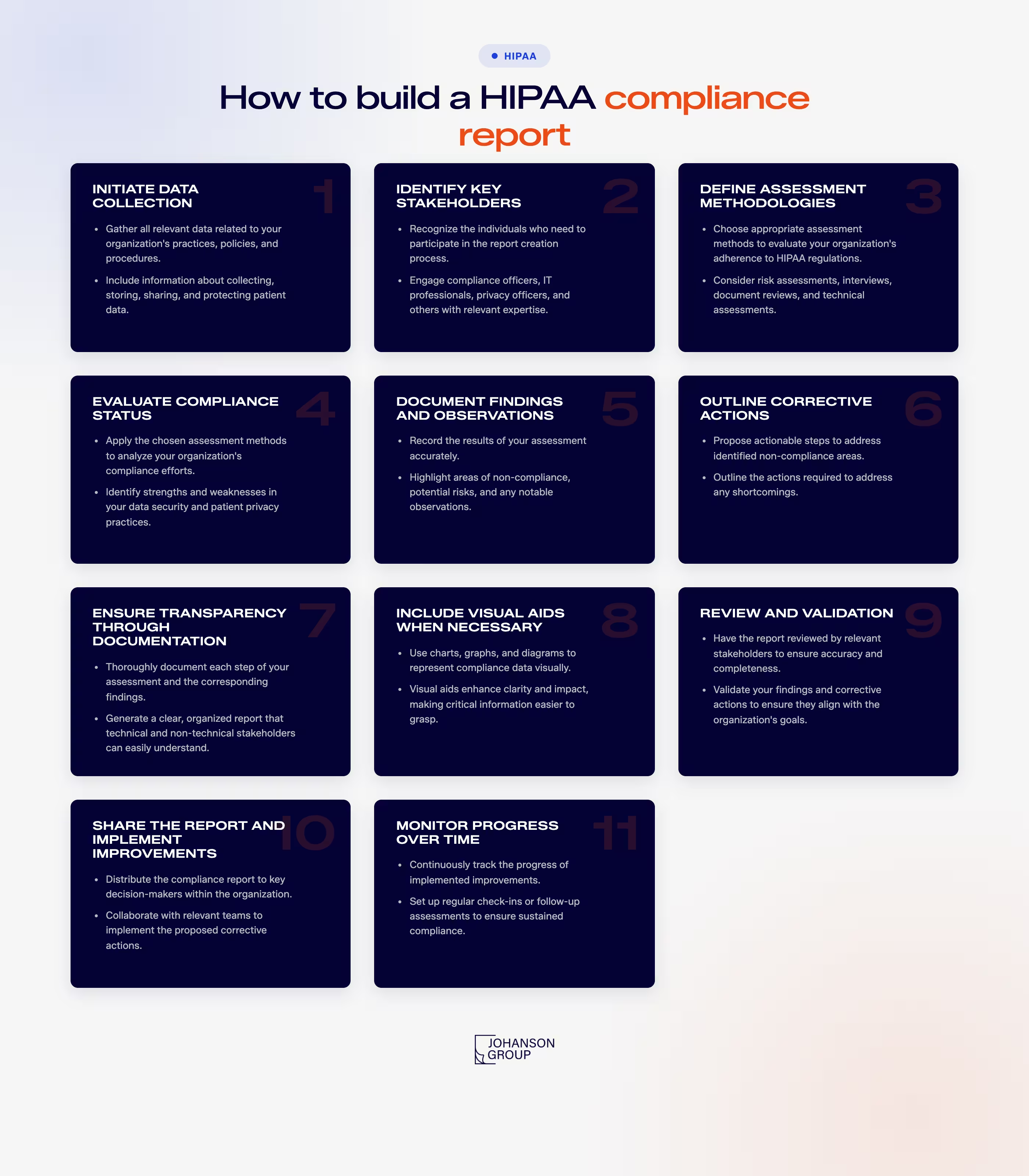
Generating a HIPAA compliance report may seem like a complex task, but with a structured approach, it becomes manageable. Here's a step-by-step guide to help you create a comprehensive and accurate compliance report:
Incorporating Internal Stakeholders and Third-Party Auditors
When dealing with compliance audits, collaboration plays a pivotal role.
Compliance officers and IT professionals, who are internal stakeholders, lend their expertise to the report creation process, ensuring accuracy and relevance. Involving third-party auditors introduces an unbiased perspective, offering new insights into compliance areas that might otherwise be overlooked.
Compliance reporting isn't a static process; it's a catalyst for growth.
Benefits Beyond Compliance: Strengthening Data Security and Trust
HIPAA compliance reports deliver more than regulatory adherence. They fortify data security, reduce breach risks, and uphold patient privacy, fostering trust.
Key advantages include:
- Enhanced Security: Reports identify vulnerabilities, bolstering defenses against breaches.
- Risk Minimization: Early risk detection curbs breach chances and consequences.
- Patient Privacy: Compliance underscores commitment to safeguarding patient data.
- Trust Building: Demonstrates data security dedication to patients and stakeholders.
- Legal Protection: Accurate reports offer evidence in legal scenarios.
- Efficiency: Compliance streamlines processes, improving operations.
- Competitive Edge: Compliance fosters reliability and differentiation.
HIPAA compliance offers a holistic approach that safeguards data, patient trust, and organizational integrity.
Ensuring Accuracy: HIPAA Reporting Best Practices

An accurate HIPAA compliance report is paramount for many reasons. Employ these best practices for reliability:
Precise Data Collection
- Gather updated policies, processes, and training records
- Ensure accurate representation of current practices
Clear Assessment Methods
- Select methods aligned with goals and organization size
- Explain methodologies to aid understanding
Thorough Documentation
- Document each step from data collection to actions
- Explain findings and rationale comprehensively
Internal Validation:
- Involve stakeholders in reviews and validation
- Validate findings with solid evidence
Regulatory Alignment
- Compare findings against HIPAA standards
- Highlight areas exceeding regulations
Accessible Presentation
- Explain technical details clearly
- Use visuals for enhanced comprehension
Audit Trail Records
- Maintain an audit trail for transparency
- Allow verification of conclusions
Evidence-Based Approach
- Rely on facts, not assumptions
- Distinguish between observations and interpretations
Embracing these practices ensures that your HIPAA compliance report enhances credibility, aligns with regulations, and highlights your commitment to integrity and health data security.
A well-crafted HIPAA compliance report reflects your organization's dedication to maintaining data security and patient privacy.
Driving Continuous Improvement
Compliance reporting isn't a static process; it's a catalyst for growth. Organizations can leverage these reports to identify areas for enhancement, initiate corrective actions, and monitor progress. Using the insights from compliance reports like HIPAA, organizations pave the way for continuous improvement, fostering a culture of excellence.
Elevating Healthcare Data Security
Comprehending HIPAA compliance reporting highlights its vital role in the healthcare ecosystem. Healthcare organizations can confidently navigate intricate regulatory requirements and patient data security by prioritizing regular reporting and embracing it as a fundamental part of their compliance program.
This goes beyond just a mandate; it reflects a collective dedication to excellence in safeguarding patient privacy and data integrity.
Ready to enhance your compliance journey?
Contact Johanson Group today to explore our risk management reporting, assessments, and auditing expertise. Whether you're aiming for HIPAA, SOC 2, or ISO 27001 compliance, we're here to help you achieve excellence in data security and regulatory adherence.
Reach out today to take the next step toward HIPAA compliance.
Services


