


Resources
Articles
Practical guides and industry updates to help your organization stay secure and compliant in a digital-first world.

The Cost of PCI Non-Compliance: Fines, Breaches, and Reputational Damage
The Cost of PCI Non-Compliance: Fines, Breaches, and Reputational Damage
Every business that accepts or handles credit card data operates on a foundation of trust. But what happens when that foundation crumbles? The Payment Card Industry Data Security Standard (PCI DSS) is not just a mandatory collection of requirements that companies have to follow; it is also a shield protecting your company’s financial future.
While initial compliance might seem like a headache and unnecessary expense, the cost of non-compliance-especially in the event of a cardholder data breach-is exponentially higher. It’s the difference between investing in an alarm system and paying for a complete rebuild after a break-in.
Are you calculating the true risk of ignoring the rules?
The Direct, Immediate Financial Hit: Fines and Penalties
The first and most measurable consequence of non-compliance comes directly from the credit card brands (Visa, Mastercard, American Express, Discover, and JCB) and your acquiring bank. These penalties can escalate rapidly.
Escalating Monthly Non-Compliance Fees:
- Fines are typically passed down from the payment networks to your acquiring bank, and then directly to your business.
- These monthly fees may start low but increase the longer you remain non-compliant.
- Level 1 Merchants and Service Providers (Highest Volume): Fines can range from $5,000 to over $100,000 per month, depending on the duration of non-compliance.
- Smaller Merchants and Service Providers: Even smaller businesses can face penalties starting from $20 to $250 per month, which is still money needlessly wanted.
Non-compliance dramatically increases the probability of a data breach. If one occurs, the fines for the violation are just the tip of the iceberg.
- Breach-Related Fines (Cost Per Record):
- If a breach happens while you are non-compliant, fines can be levied for each compromised cardholder record. This can range from $50 to $90 per record. A breach affecting even a few thousand customers quickly becomes a six-figure penalty.
- Total fines can reach up to $500,000 per incident.
- Forensic Investigation: You may be required to hire a certified PCI Forensic Investigator (PFI) to determine the cause and scope of the breach. This alone can cost tens to hundreds of thousands of dollars.
- Additional Assessment Costs: For entities determined to be ‘high-risk’ the card brands can mandate additional assessments to be performed (e.g. quarterly versus annual); this can add up to significant costs and tie up valuable internal resources.
- Card Replacement and Notification Costs: Your business may be held liable for the cost of notifying impacted customers and reissuing new credit cards, which typically runs a few dollars per card.
The "Hidden" Costs that Cripple Businesses
Beyond the direct fines, the ripple effect of non-compliance can cause long-term, existential damage to your operations and reputation.
- Legal Fees and Lawsuits:
- Expect class-action lawsuits from affected customers and legal battles with card brands. Legal defense, settlements, and compliance oversight can cost millions and drag on for years.
- Reputational Damage and Loss of Trust (The Brand Killer):
- After a breach, customer trust evaporates. Studies show a significant percentage of consumers will stop doing business with a company that has experienced a data breach.
- Cost: Loss of sales, increased customer acquisition costs, and years of expensive public relations efforts to rebuild your brand. This cost is often the most difficult to recover from.
- Increased Transaction Fees & Loss of Processing Privileges:
- Your acquiring bank may deem you high-risk and impose permanently higher transaction rates.
- In the most severe cases, your merchant accounts could be terminated. Losing the ability to accept credit card payments is a death blow for most modern businesses.
- Insurance Implications: Non-compliance can lead to the voiding of your cyber-insurance policy, leaving you to shoulder the entire financial burden.
Ready to stop gambling with your company's future? Consult a Qualified Security Assessor (QSA) today to ensure your PCI DSS compliance is rock-solid and turn a potential liability into a competitive advantage.

What is SOC 3? Everything You Need to Know
What is SOC 3? Everything You Need to Know
When everything happens online, nothing matters more than building and maintaining customer trust. If your organization handles any kind of sensitive data, you can’t afford to be wishy-washy about protecting it. Once you’ve understood the importance of security, let’s say you’ve taken the necessary steps to achieve SOC 1 or SOC 2 reports, but what more can you do to bolster up this achievement? This is where a SOC 3 report comes in.
What is SOC 3?
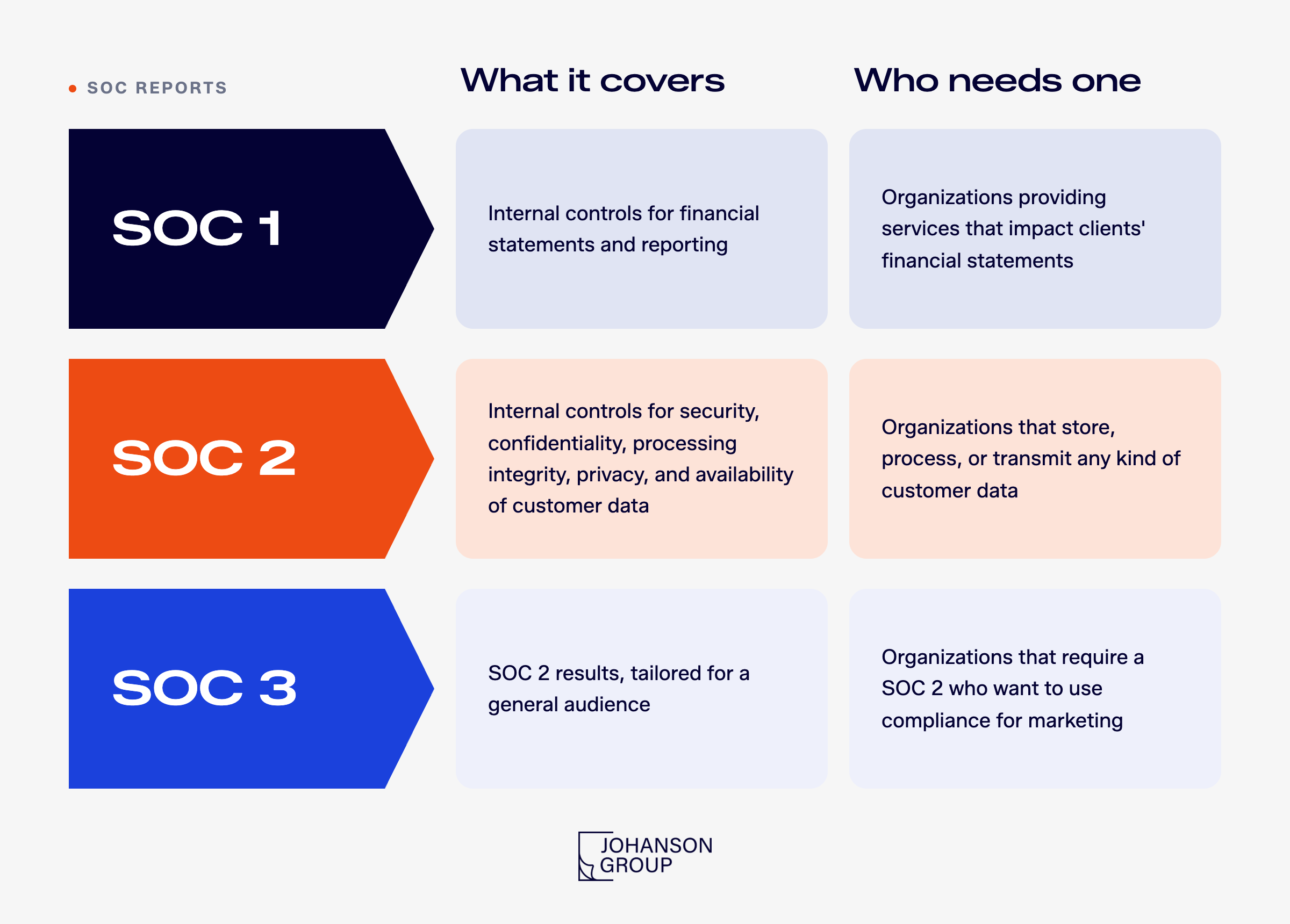
A SOC 3 report is specifically meant to be a public facing document that provides a summary of an organizations controls. It is a general-use report, unlike the more restricted SOC 1 or SOC 2 reports. Organizations can use a SOC 3 report to assure customers, stakeholders, and general public that their systems meet specific trust service criteria.
READ MORE: SOC 1 vs SOC 2 vs SOC 3: Understanding the Differences
The report confirms the effectiveness of controls relevant to the 5 trust service criteria. This assurance is based on an independent auditor’s opinion following an evaluation of the controls over a specified period, usually 12 months. It’s a testament to operational excellence and a strategic tool for marketing and business development.
Components of a SOC 3 Report
The structure of a SOC 3 report is designed for clarity and broad distribution. It includes several key components:
- Management’s Assertion: A declaration by the service organization's management detailing their responsibility for the system and the fairness of the control description. They assert that the controls were effective throughout the reporting period.
- Independent Service Auditor’s Report: This is the core of the report. The CPA firm (auditor) provides their opinion on whether management's assertion is fairly stated. This opinion is unqualified (clean) when the controls were effective, providing the highest level of assurance.
- System Description (General): A concise, non-technical overview of the service organization's system, its services, the principal controls, and the applicable Trust Service Criteria. Unlike the detailed SOC 2 description, the SOC 3 version is brief and focuses on the scope.
- Applicable Trust Service Criteria: The report identifies which of the five criteria (Security, Availability, Processing Integrity, Confidentiality, Privacy) were addressed by the audit. Security is a mandatory baseline criterion for all SOC 2 and SOC 3 reports.
Who Needs a SOC 3 Report?
The SOC 3 report serves specific strategic needs:
- Service Organizations Targeting the Public: Any service provider, particularly those in the SaaS (Software as a Service), data center, managed IT services, or cloud computing sectors, benefits immensely from a SOC 3.
- Organizations Seeking Public Credibility: Companies wanting to publicly display their adherence to high standards of internal control often choose the SOC 3. It's an excellent inclusion for a company's website or marketing materials.
- Service Organizations That Already Have a SOC 2: Since a SOC 3 is essentially a summarized, general-use version of a successful SOC 2 (Type 2) report, organizations that have already undergone the rigorous SOC 2 audit find the SOC 3 a straightforward, value-added deliverable.
When Should You Consider a SOC 3 Report?
Timing the decision to pursue a SOC 3 aligns with business strategy and maturity:
- After Achieving SOC 2 Type 2 Success: A SOC 3 report is issued only after a successful SOC 2 Type 2 audit. Organizations should first complete the in-depth, restricted-use SOC 2 Type 2. The SOC 3 then becomes the logical next step for public communication.
- During Competitive Bidding: When potential customers require proof of control assurance but don't need the detailed, proprietary information contained within a SOC 2, the SOC 3 serves as a perfect, easily shareable validation.
- For Marketing and Transparency Initiatives: Consider the SOC 3 when launching major marketing campaigns emphasizing trust, security, and compliance. Its public nature reinforces a strong commitment to transparency and operational integrity.
Johanson Group Can Help Obtain a SOC 3 Report
Securing a SOC 3 report requires expert guidance through the complex audit process. Johanson Group specializes in helping service organizations achieve their assurance goals. As a qualified CPA firm, we perform the necessary SOC 2 Type 2 examination. Upon a successful, unqualified opinion, we prepare the resulting SOC 3 report.

What is NIST 800-171?
What is NIST 800-171?
Securing sensitive information is a critical imperative for organizations. In the realm of government contracting, a specific set of security standards governs the protection of sensitive, yet unclassified, data. This blog post explores NIST Special Publication 800-171, a vital framework for safeguarding Controlled Unclassified Information (CUI).
What is NIST 800-171?
NIST SP 800-171, officially titled "Protecting Controlled Unclassified Information in Nonfederal Systems and Organizations," provides a set of guidelines for protecting government data that resides outside federal systems. The National Institute of Standards and Technology (NIST) developed these standards to ensure that non-federal entities, such as contractors and subcontractors, implement proper security controls. This framework mandates the protection of CUI to maintain data integrity and confidentiality.
What is Controlled Unclassified Information (CUI)?
Controlled Unclassified Information (CUI) is a category of data that requires protection but has not been classified for national security purposes. CUI includes a wide range of information, such as intellectual property, research data, financial details, and personal identifiable information (PII). A federal government agency or an authorized third party designates CUI. The CUI Registry provides a comprehensive list of CUI categories and subcategories. This designation ensures consistent handling and protection across various government and non-government systems.
Who Needs to be NIST 800-171 Compliant?
Any non-federal organization that processes, stores, or transmits Controlled Unclassified Information (CUI) on behalf of a federal government agency must comply with NIST 800-171. This requirement applies to a wide range of entities, including prime contractors, subcontractors, and other vendors in the federal supply chain. Compliance is often a contractual obligation for these organizations. Failure to comply can result in contract loss and other severe penalties.
List of NIST 800-171 Controls
NIST SP 800-171 outlines 14 security families, each containing a set of security requirements. These controls cover a broad spectrum of cybersecurity measures. Organizations must implement these controls to protect CUI. The 14 families include:
- Access Control: Limiting access to information systems and CUI.
- Awareness and Training: Ensuring personnel are trained in security protocols.
- Audit and Accountability: Creating and retaining system audit logs.
- Configuration Management: Establishing baseline configurations for systems.
- Identification and Authentication: Verifying the identity of users and devices.
- Incident Response: Developing a plan for handling security incidents.
- Maintenance: Performing timely and effective system maintenance.
- Media Protection: Protecting both physical and digital media.
- Physical Protection: Controlling physical access to systems and CUI.
- Personnel Security: Screening personnel with access to CUI.
- Risk Assessment: Periodically assessing risks to CUI.
- Security Assessment: Evaluating the security controls of information systems.
- System and Communications Protection: Monitoring, controlling, and protecting communications.
- System and Information Integrity: Protecting systems from malicious software and unauthorized changes.
How Johanson Group Can Help Achieve NIST 800-171 Compliance
Achieving NIST 800-171 compliance can be a complex process. Johanson Group specializes in guiding organizations through this intricate framework. Our experts provide a full suite of services, including gap analysis and other security framework audits. We offer comprehensive support to ensure your organization meets all the required security controls. The Johanson Group empowers your business to not only achieve but maintain compliance, safeguarding your data and securing your government contracts.

Unpacking Your SOC Audit Opinion: What Your Report Truly Means
Unpacking Your SOC Audit Opinion: What Your Report Truly Means
Your SOC audit report includes a crucial element: your auditor's opinion. This opinion directly impacts how customers and stakeholders view your organization's security and control environment. It's a vital statement, not just a formality.
This article explores the four types of SOC audit opinions. We'll explain the implications of each for your business and discuss potential next steps. Understanding these classifications empowers you to communicate effectively with stakeholders and strengthen your control environment.
Why Your SOC Opinion Is a Critical Business Asset
Consider your SOC report a clear signal of trust. Businesses today often rely on third-party service providers. To manage risks, these businesses frequently require vendors to undergo SOC examinations. This provides independent assurance regarding security and data handling practices.
Your auditor's opinion forms the cornerstone of this assurance. A strong, positive opinion enhances customer confidence, streamlines sales processes, and can open doors to new business opportunities. Conversely, a less favorable opinion can trigger scrutiny, prompt additional client due diligence, and even result in lost business.
Let's delve into the specific outcomes your SOC audit can deliver.
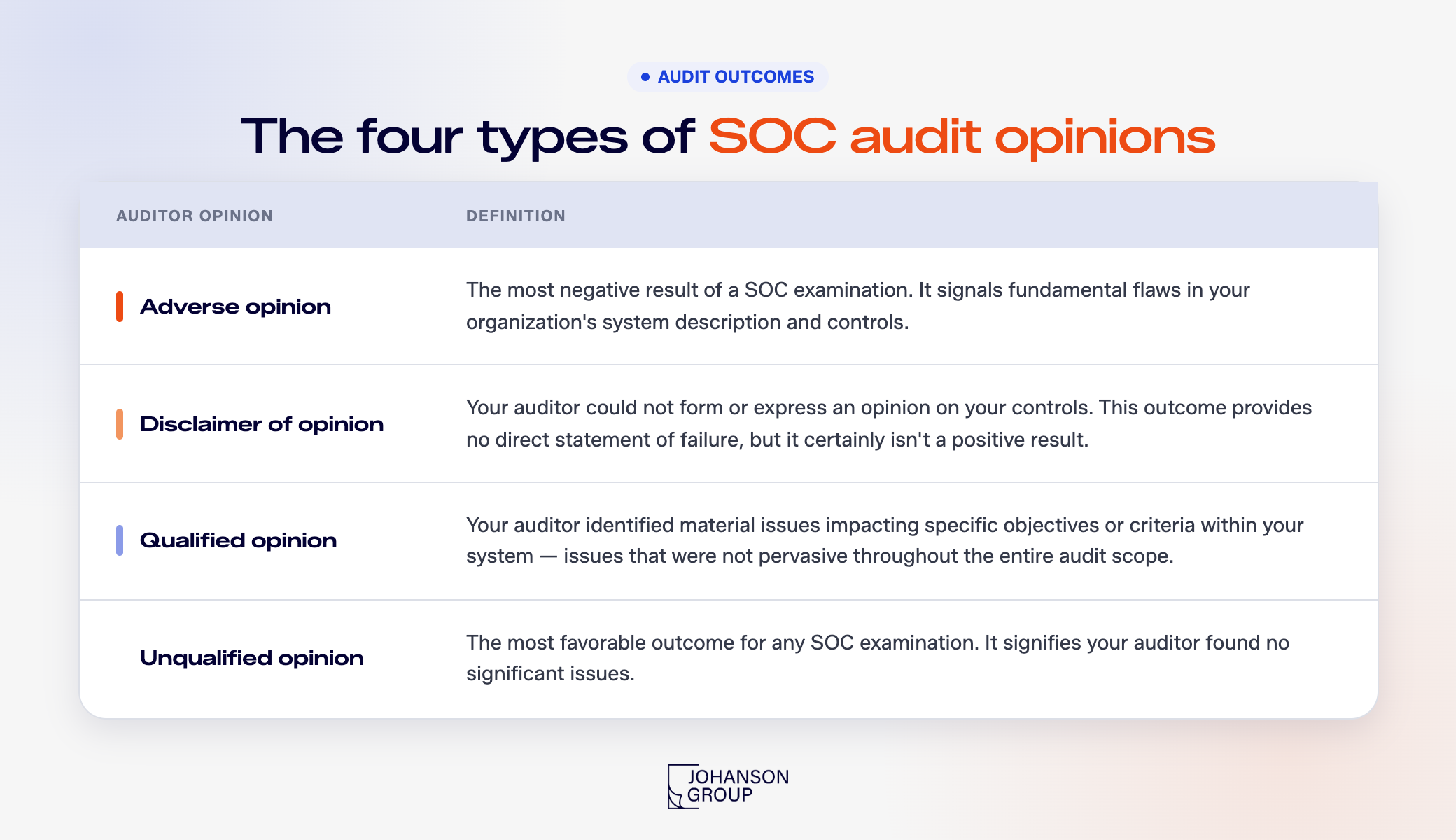
The Four Types of SOC Audit Opinions:
Understanding these distinctions is essential for interpreting your report and planning your actions.
1. Adverse Opinion: The Most Serious Outcome
An adverse opinion represents the most negative result for a SOC examination. It unequivocally signals fundamental flaws in your organization's system description and controls.
- Meaning: Your auditor found substantial and widespread (material and pervasive) misstatements or deficiencies in your controls. They possess sufficient evidence, concluding that report users cannot rely on your scoped system.
- Auditor's language: Expect direct phrasing such as, "because of the significance of the matter."
- Impact: This opinion will severely damage your organization's reputation and trust with customers and partners. Immediate and comprehensive remediation efforts become essential.
2. Disclaimer of Opinion: No Verdict Rendered
A disclaimer of opinion signifies your auditor could not form or express an opinion on your controls. This outcome provides no direct statement of failure, but it certainly isn't a positive result.
- Meaning: The auditor could not gather sufficient evidence for an opinion. Common reasons include management restricting examination procedures or a lack of accessible information.
- Impact: A disclaimer leaves stakeholders without the assurance they sought. It indicates an incomplete assessment, which can concern a discerning client. You'll need to address the underlying reasons for the disclaimer to successfully complete future audits.
3. Qualified Opinion: Specific Issues Identified
A qualified opinion indicates your auditor identified material issues impacting specific objectives or criteria within your system. These issues were not pervasive throughout the entire audit scope.
- Meaning: Certain areas show your system was not presented fairly, controls were not suitably designed, or controls were not operating effectively to achieve their intended purpose.
- Auditor's language: This opinion often includes phrases like "except in the matter of..." or "except for..." An accompanying explanatory paragraph will detail the specific issues.
- Impact: A qualified opinion offers a better outcome than an adverse opinion or a disclaimer. It acknowledges deficiencies but confirms the overall system can still be relied upon to some extent. It signals to customers that some additional due diligence might be required on their end. You will need to demonstrate clear corrective action plans for the identified issues. Providing commentary or remediation plans alongside your report is a common practice.
4. Unqualified Opinion: The Standard of Excellence (Clean Report)
An unqualified opinion represents the most favorable outcome for any SOC examination. It signifies your auditor found no significant issues.
- Meaning: Your in-scope system and controls were presented fairly in all material respects. They achieved their stated objectives and criteria with no material modifications required.
- Key Detail: An unqualified opinion accommodates minor findings. These findings do not prevent the achievement of the specified objectives or criteria.
- Impact: This ideal outcome provides strong assurance to your customers and stakeholders. It confirms your organization's security and control environment are robust and trustworthy, enhancing your reputation and competitive advantage.
Preparing for Your SOC Journey
The outcome of your SOC examination profoundly impacts your business. Understanding these potential opinions from the outset helps you prepare more effectively for the audit process.
At Johanson Group, we deeply understand SOC examinations. We possess extensive experience guiding organizations through this process. We can help you understand what to expect and work towards the best possible outcome.
Ready to discuss your SOC audit needs and prepare for your examination? Contact us today for a consultation!
Unpacking Your SOC Audit Opinion: What Your Report Truly Means
Common Cybersecurity Audit Pitfalls and How to Avoid Them
Common Cybersecurity Audit Pitfalls and How to Avoid Them
Cybersecurity audits are essential for any organization looking to strengthen its defenses, ensure compliance, and build trust with customers. But while the goal is clear, the path to a successful audit can be fraught with missteps. Many organizations fall into common traps that can derail the process, lead to incomplete findings, or even result in compliance failures.
The good news? Most of these pitfalls are entirely avoidable with proper planning and execution. This blog post will highlight the most frequent mistakes organizations make during cybersecurity audits and provide actionable solutions to ensure your next audit is a smooth and productive experience.
Pitfall #1: Underestimating the Scope and Resources Required
One of the biggest mistakes is treating a cybersecurity audit as a quick checkbox exercise. Organizations often underestimate the time, personnel, and documentation required, leading to last-minute scrambles and incomplete information.
How to Avoid It:
- Plan Ahead, Way Ahead: Start preparing months in advance. Understand the audit's scope (e.g., ISO 27001, NIST, SOC 2, HIPAA, PCI DSS) and identify all the areas that will be scrutinized.
- Allocate Dedicated Resources: Assign a core team to the audit process. This includes not just IT and security personnel, but also representatives from legal, HR, and operations, depending on the audit's scope.
- Budget Appropriately: Factor in not only the auditor's fees but also potential costs for pre-audit assessments, necessary technology upgrades, or training.
Pitfall #2: Insufficient Documentation and Evidence
Auditors rely heavily on documented evidence to verify your security controls. A lack of clear, up-to-date policies, procedures, and evidence of their implementation is a surefire way to generate audit findings. This often stems from poor record-keeping or a "we know what we do" mentality without it being formally written down.
How to Avoid It:
- Document Everything (Relevant): Ensure all security policies, procedures, incident response plans, access control lists, configuration standards, and training records are well-documented and current.
- Implement Strong Change Management: Any changes to systems or processes that impact security should be documented, along with approval trails.
- Automate Evidence Collection Where Possible: Utilize security information and event management (SIEM) systems, vulnerability scanners, and configuration management tools to automatically collect and store evidence of control effectiveness.
- Organize Your Evidence: Create a centralized, easily accessible repository for all audit-related documentation.
Pitfall #3: Lack of Communication and Collaboration
Cybersecurity audits often involve multiple departments and stakeholders. Poor communication between teams, or between the organization and the auditors, can lead to misunderstandings, delays, and frustration.
How to Avoid It:
- Establish Clear Communication Channels: Designate a primary point of contact for the audit team. Hold regular internal meetings to discuss progress, challenges, and assigned tasks.
- Foster Cross-Departmental Collaboration: Ensure that IT, legal, HR, and other relevant departments are aware of their responsibilities and actively participate in providing necessary information.
- Be Transparent with Auditors: Don't hide issues. Open and honest communication about your security posture, including any known weaknesses, can actually build trust and lead to more constructive recommendations.
Pitfall #4: Neglecting Pre-Audit Assessments and Remediation
Waiting until the official audit begins to discover your weaknesses is a recipe for disaster. Many organizations skip pre-audit assessments, leaving them vulnerable to unexpected findings.
How to Avoid It:
- Conduct Regular Internal Audits: Implement a continuous internal audit program to identify and address security gaps proactively. This helps you mimic the external audit experience and fix issues before they become formal findings.
- Perform Penetration Testing and Vulnerability Scans: Regularly test your systems for exploitable weaknesses. This provides an attacker's perspective and helps prioritize remediation efforts.
- Prioritize Remediation: Don't just identify issues; fix them. Develop a clear remediation plan for any vulnerabilities or policy gaps found during pre-assessments and track progress diligently.
Pitfall #5: Focusing Solely on Compliance, Not True Security
While compliance is a key driver for many audits, an overemphasis on merely "checking the boxes" without genuinely improving your security posture is a dangerous pitfall. Compliance does not equal security.
How to Avoid It:
- Adopt a Risk-Based Approach: Identify your most critical assets and the threats they face. Prioritize security controls based on the potential impact of a breach, not just what's required by a specific framework.
- Embrace Continuous Improvement: View audit findings as opportunities for growth, not just deficiencies to be corrected. Implement a robust security program that continuously adapts to the evolving threat landscape.
- Educate Your Workforce: Human error remains a leading cause of breaches. Regular security awareness training can significantly enhance your overall security posture beyond mere compliance.
Conclusion: Your Audit as a Catalyst for Stronger Security
Cybersecurity audits, when approached correctly, are invaluable tools for validating your security controls, identifying weaknesses, and driving continuous improvement. By avoiding these common pitfalls – through meticulous planning, thorough documentation, clear communication, proactive remediation, and a genuine focus on security – your organization can transform a potentially stressful event into a powerful catalyst for a more robust and resilient cybersecurity posture.
Need help navigating your next cybersecurity audit? Get started today for expert guidance and support.
What Is Required for a Successful SOC 2 Risk Assessment?
What Is Required for a Successful SOC 2 Risk Assessment?
You’ve done your research, know what SOC 2 is, and how it can benefit your organization. But you still have some questions about the process. In this article, we will dive into the key components of a comprehensive SOC 2 risk assessment and steps to ensure an effective process.
Key Components of a Comprehensive SOC 2 Risk Assessment
Risk assessments involve key elements to ensure organizations have thoroughly identified, evaluated and addressed potential risks to the Trust Service Criteria Categories. The following are components of a SOC 2 assessment are:
- Identify Relevant Trust Service Categories
- Defined by SOC 2, TSC encompasses Security, Availability, Processing, Integrity, Confidentiality, and Privacy. A tailored risk assessment means selecting which categories apply to the organization based on its operational goals and system functionalities. For example, a company that provides SaaS and deals with sensitive customer information will focus heavily on on Security and Confidentiality
- Asset Inventory & Classification
- Organizations must identify and categorize assets that are critical to their operations. These can include anything from physical devices, softwares, and data bases to personnel and processes.
- Threat Landscape Analysis
- An in-depth analysis of potential threats is a vital part of the assessment. Threats can range from external threats, such as fraud and cyber attacks, to internal risks like system malfunctions and employee error. It is also important to examine past incidents and industry specific risks to enhance the accuracy of the analysis.
- Risk-Based Prioritization
- After risks are identified and analyzed, the next step is to prioritize them based on factors such as likelihood and severity. Using standardized risk evaluation frameworks will allow you to concentrate resources on mitigating the most significant risks first.
- Control Effectiveness Evaluation
- Controls that are already in place should be evaluated to determine their capability to mitigate identified risks. These controls can include technical safeguards like access restrictions, procedural controls like data encryption policies, and organizational measures like employee training.
- Compliance Mapping
- The risk assessment must align with the SOC 2 framework by mapping relevant risks to specific criteria within the Trust Service Principles. This will ensure all risks are properly identified and meet compliance requirements.
- Documentation Review & Maintenance
- Proper documentation is extremely important. Risk findings, evidence, stakeholder decisions, and evaluation criteria must be recorded for reference and audit purposes. Systems evolve and risks change, which is why it’s important to regularly review and update documentation.
An effective SOC 2 risk assessment is more than a checkbox-its the foundation of your compliance program. By taking a structured approach you will not only be well-prepared for your audit, but you’ll also build a stronger security posture that will benefit your organization in the long run.
If you’re ready to begin your SOC 2 journey or want expert guidance through your risk assessment and audit, contact our team today!
Services


