


The 5 Benefits of SOC 2 Reporting for Your Organization

Service Organization Control (SOC) 2 reporting has emerged as a gold standard for demonstrating a commitment to data security and privacy. This article explores six key benefits of SOC 2 reporting and why it is essential for the success of your organization.
In an era dominated by digital transformation and increasing cybersecurity threats, organizations are facing the critical task of safeguarding sensitive information. Service Organization Control (SOC) 2 reporting has emerged as a gold standard for demonstrating a commitment to data security and privacy. This article explores six key benefits of SOC 2 reporting and why it is essential for the success of your organization.
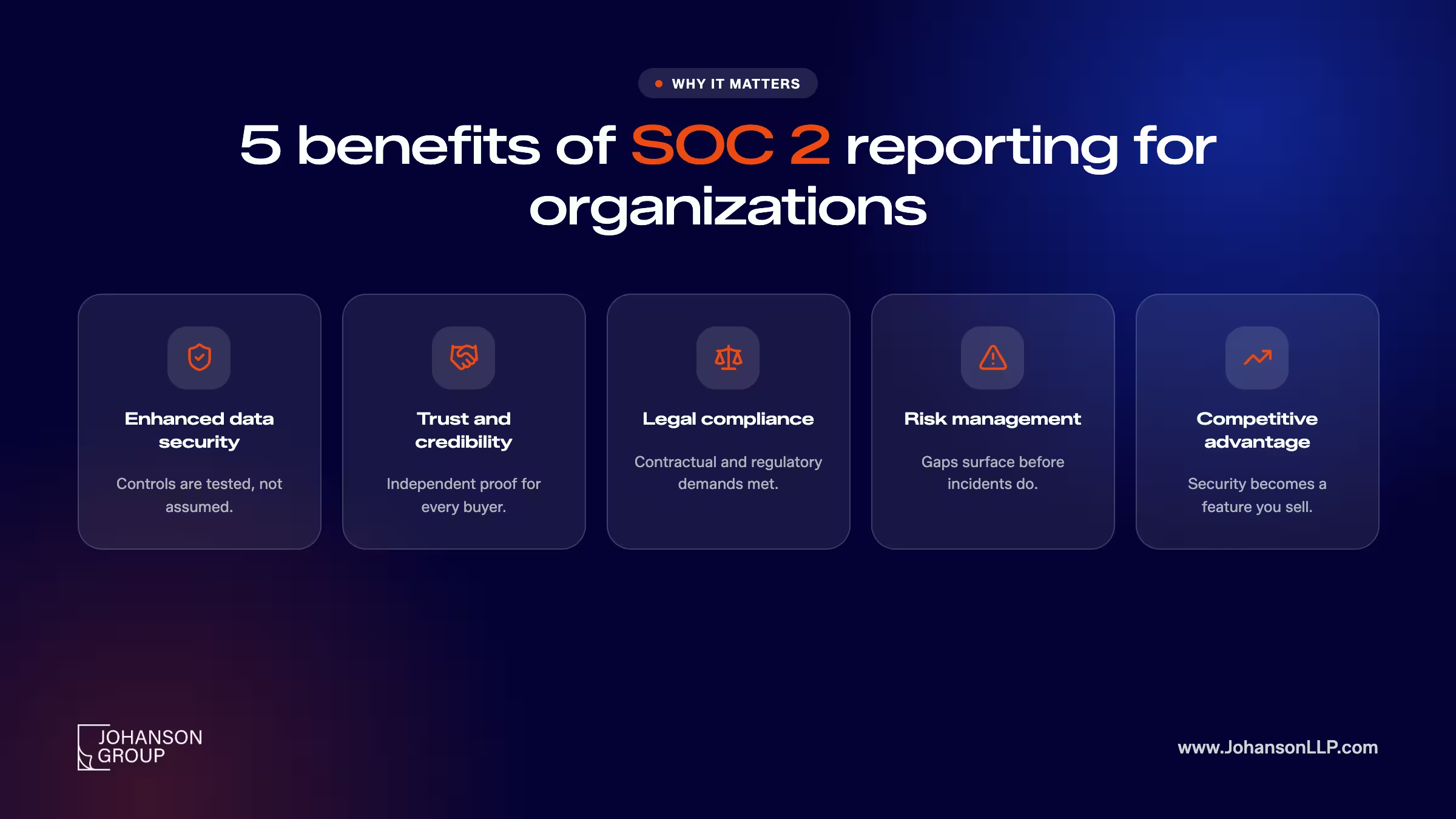
- Enhanced Data Security:
- SOC 2 compliance focuses on the protection of customer data, ensuring that organizations implement robust security measures. By adhering to SOC 2 standards, your organization can fortify its defenses against cyber threats, safeguarding sensitive information from unauthorized access or breaches. Enhanced data security not only protects your customers but also builds trust and credibility in the marketplace.
- Marketplace Trust and Credibility:
- In today's competitive business landscape, gaining the trust of clients and partners is paramount. SOC 2 compliance serves as a testament to your organization's commitment to data security and privacy. When clients know that you have undergone a rigorous SOC 2 audit, they are more likely to trust your services and share sensitive information, fostering stronger business relationships.
- Legal and Regulatory Compliance:
- As data protection regulations become more stringent, organizations must align with legal and regulatory requirements. SOC 2 reporting helps your organization demonstrate compliance with industry-specific regulations and standards. This proactive approach not only minimizes the risk of legal repercussions but also positions your organization as a responsible steward of sensitive information.
- Operational Efficiency and Risk Management:
- SOC 2 reporting involves a thorough assessment of internal controls and processes. This evaluation not only identifies potential vulnerabilities but also highlights areas for improvement. By addressing these shortcomings, organizations can enhance operational efficiency and implement effective risk management strategies. SOC 2 compliance ensures that your organization is well-prepared to face evolving cybersecurity challenges.
- Competitive Advantage:
- In a business landscape where trust and security are paramount, SOC 2 compliance sets your organization apart from competitors. Displaying the SOC 2 certification in marketing materials and communications signals to clients and prospects that you take data security seriously. This competitive advantage can be a decisive factor in winning new business opportunities and retaining existing clients.
Read More about How to Read a SOC 2 Report
In summary, SOC 2 reporting is not only a critical compliance measure but also a strategic investment that can significantly contribute to the enduring success of your organization. From fortifying data security to earning trust in the marketplace, the advantages of SOC 2 compliance are diverse and impactful. By adopting SOC 2 standards, your organization positions itself as a frontrunner in the dynamic realm of data security and privacy.
As you contemplate the transformative benefits of SOC 2 reporting, consider partnering with Johanson Group, a recognized leader in guiding organizations through the complexities of compliance. Our experienced professionals are dedicated to helping you navigate the SOC 2 journey seamlessly. Take the proactive step towards enhanced data security, regulatory compliance, and operational excellence by choosing Johanson Group as your trusted ally in SOC 2 reporting. Your organization's success begins with a commitment to the highest standards of data security – let Johanson Group be your partner in achieving and surpassing those standards.


.png)


7 Common Myths About SOC 2: Debunking Misconceptions
7 Common Myths About SOC 2: Debunking Misconceptions
If you're navigating the world of SOC 2, it's essential to distinguish fact from fiction. Let's debunk seven common myths about SOC 2 to help you better understand its importance and application.
Myth 1: SOC 2 Is a Certification
Reality: Contrary to popular belief, SOC 2 is not a certification but an attestation. An independent auditor reviews and attests that your organization meets the SOC 2 criteria. This attestation is documented in a report, which can be shared with stakeholders to demonstrate your compliance. Unlike certifications, which often involve passing an exam or meeting a predefined set of requirements, SOC 2 attestation is a thorough examination of your controls over a period of time.
READ MORE: What is a SOC 2 Attestation?
Myth 2: SOC 2 Compliance Is Only for Tech Companies
Reality: While it's true that tech companies were early adopters of SOC 2, the standards are applicable to any organization that handles customer data. This includes industries like healthcare, finance, and even retail. The principles of SOC 2 - security, availability, processing integrity, confidentiality, and privacy - are universal and can benefit any business striving to protect its data and build trust with customers.
Myth 3: SOC 2 Compliance Is a One-Time Event
Reality: SOC 2 compliance is an ongoing process, not a one-time event. Achieving SOC 2 compliance means your organization has established systems and controls to protect data, but maintaining compliance requires continuous monitoring and regular audits. Typically, SOC 2 reports are issued annually, and businesses need to stay vigilant to ensure they meet the standards year-round.
READ MORE: SOC 2 Frequency: What You Should Know
Myth 4: SOC 2 Audits Are Expensive and Time-Consuming
Reality: While SOC 2 audits can be resource-intensive, they are not necessarily prohibitively expensive or excessively time-consuming. The cost and duration of an audit depend on the size of your organization, the complexity of your systems, and how well-prepared you are. Investing in SOC 2 compliance can actually save your company money in the long run by preventing data breaches and enhancing your reputation.
Myth 5: SOC 2 Compliance Guarantees Total Security
Reality: SOC 2 compliance significantly enhances your organization's security posture but does not guarantee absolute security. It ensures that you have effective controls in place to protect data, but it cannot account for every potential threat or vulnerability. Security is a dynamic field, and new risks emerge continuously. Thus, SOC 2 should be part of a broader, comprehensive security strategy.
Myth 6: SOC 2 and ISO 27001 Are Interchangeable
Reality: SOC 2 and ISO 27001 are both important security frameworks, but they are not interchangeable. SOC 2 focuses on service organizations and their handling of customer data, emphasizing the five Trust Service Criteria. In contrast, ISO 27001 is a global standard for managing information security, applicable to all types of organizations. Both have their own benefits, and choosing one over the other depends on your business needs and goals.
READ MORE: SOC 2 vs. ISO 27001: Which to Choose
Myth 7: Only Large Companies Need SOC 2 Compliance
Reality: Small and medium-sized enterprises (SMEs) can benefit just as much from SOC 2 compliance as large corporations. In fact, SOC 2 can be a differentiator for SMEs, demonstrating their commitment to security and gaining customer trust. As cyber threats don't discriminate by size, having robust security controls is crucial for businesses of all sizes.
READ MORE: Understanding SOC 2 Audits for Startups
Understanding SOC 2 compliance and dispelling common myths is essential for any organization aiming to protect its data and enhance its reputation. By recognizing that SOC 2 is applicable to various industries, requires ongoing effort, and forms part of a broader security strategy, businesses can better prepare for and benefit from SOC 2 compliance.
Johanson Group stands out as a premier choice for conducting your SOC 2 compliance audits. With years of experience and a team of seasoned professionals, Johanson Group offers a comprehensive approach to ensure your organization meets the rigorous SOC 2 standards.

SOC 2 vs. ISO 27001: Which to Choose
SOC 2 vs. ISO 27001: Which to Choose
You're probably familiar with ISO 27001 and SOC 2. You may have also heard that they are similar, but there are critical differences between the two standards.
This post will examine these differences and help you decide which standard suits your organization.
What is SOC 2?
SOC 2 is a certification to help organizations establish and maintain a comprehensive ISMS. It's an independent audit, review, and attestation of the security controls in place at the company. The AICPA (Association of International Certified Public Accountants) maintains the standard. In other words, SOC 2 is a framework that guides how to build an effective Information Security Management System (ISMS).
The standard consists of three parts:
- Part 1: Service Organization Controls
- Part 2: Attestation Engagements
- Part 3: Communication Processes
READ MORE: What is a SOC 2 Attestation?
What is ISO 27001?
ISO 27001 is a risk management standard that specifies requirements for an Information Security Management System (ISMS). The goal of an ISO 27001 is to help organizations implement an information security policy and achieve compliance with requirements laid out in other international standards such as ISO 9001: 2000.
ISO 27001 (also known as ISO/IEC 27001:2013) is a process standard that outlines the steps needed to develop and maintain an ISMS. However, it doesn't include specific language on performing these tasks; you need to use other resources like the NIST SP 800-30 for guidance on how exactly to do them.
READ MORE: Key Differences Between ISO 27001 and 27002
Main Differences Between ISO 27001 and SOC 2
ISO 27001:
An ISO 27001 certification shows that an organization conforms to the standard's framework. A good auditor will check that your system includes all of its requirements and ensure compliance with each one.
- This certification is well-known and respected around the world.
- The controls framework is rigid and assumes that an organization will be large from its inception. This can make it difficult, but not impossible, for start-ups to comply with the framework's requirements.
- Implementation of new procedures and policies can take between nine months to three years.
- Some customers may accept a self-audit as a substitute for certification.
- You will receive one page of confirmation from the auditor, outlining their findings and conclusions.
- ISO 27001 certifications last up to 3 years. Organizations must perform recurring compliance activities such as internal and yearly surveillance audits to retain their certification.
SOC 2:
A SOC 2 is an attestation report on how well your organization has implemented various security, confidentiality, availability, and privacy standards. A SOC 2 report is well-respected in the United States and increasingly respected throughout Europe.
- You can test any controls you want—a flexibility that makes it suitable for organizations just starting with security.
- It also includes non-security measures that help make your customers feel safe.
- SOC 2 reports are typically completed within 45 days.
- Security is one area the audit covers; it also examines corporate governance and vendor management. The report may include sections on confidentiality, availability processing integrity, and privacy.
- Your SOC 2 auditor will test the design of your system and, in addition, whether or not controls are operating effectively.
- After the audit, you will receive a detailed report from the auditor that demonstrates your customers' data is secure.
How SOC 2 and ISO 27001 are similar
SOC 2 and ISO 27001 are similar in that they provide a framework to help organizations establish and maintain an ISMS.
Similarities:
- Both are auditing standards requiring an independent third-party audit to ensure your products or services conform to a set of standards preventing providers from falsely claiming compliance with a given standard when they have not met that standard's requirements.
- Both offer guidance on how to create and implement an Information Security Management System (ISMS).
Which Is Best Suited for Your ISMS Needs?
The difference between SOC 2 and ISO 27001 is that neither one is a one-size-fits-all proposition.
The two standards differ in their scope, focus, and compliance requirements. While both measures are designed to safeguard confidential data, they have different approaches that make them more or less suitable for various organizations.
Industries that benefit from ISO 27001 Certification:
ISO 27001 certification is used in:
- Information technology
- Finance
- Telecommunications
- Healthcare
READ: Ready to get your ISO 27001 certification? Get a quote today.
Industries that benefit from SOC 2 audits:
For any organization, regardless of size or income, this route is typically faster than ISO 27001 certification and just as respected.
Industries that benefit from SOC 2 audits are:
- Technology
- SaaS
- Healthcare
- Financial, banking, and crypto
- Education
A risk advisory CPA can help you determine which standard best suits your ISMS needs. They will evaluate your company profile and security measures before recommending a SOC 2 audit or ISO 27001 certification.
READ MORE: Are you sure you're ready for a SOC 2 audit? Here's a SOC 2 Pre-Audit Checklist to help you prepare.
SOC 2 and ISO 27001 are similar in that they provide a framework to help organizations establish and maintain an ISMS. However, some key differences between the two may make one more suited for your organization.
If you need help determining which one is right for you or more information on how they compare, contact Johanson Group, LLC. today!
At the end of the day, SOC 2 and ISO 27001 are similar in that they both provide a framework to help organizations establish and maintain an ISMS. However, there are some key differences between the two that may make one more suited for your organization. If you’re not sure which one is right for you or need more information on how they compare, contact our experts today!
SOC 2 Compliance: 5 Common Questions
SOC 2 Compliance: 5 Common Questions
SOC 2 compliance has emerged as a crucial standard for businesses handling sensitive information. But what exactly does SOC 2 entail? What benefits does it offer, and how can you determine if your organization is ready for it? Let's delve into these questions and demystify SOC 2 compliance.
1. What are the benefits of SOC 2?
SOC 2 compliance isn't just a checkbox exercise; it's a testament to your organization's commitment to security, privacy, and operational integrity. By adhering to SOC 2 standards, you signal to your clients and partners that their data is in safe hands. Here are some key benefits:
- Enhanced Trust: SOC 2 compliance demonstrates your dedication to protecting sensitive data, fostering trust with clients and stakeholders.
- Competitive Advantage: In today's data-driven world, SOC 2 compliance can be a differentiator, giving your business a competitive edge.
- Risk Mitigation: By implementing SOC 2 controls, you reduce the risk of data breaches and operational disruptions, safeguarding your reputation and bottom line.
2. What is the difference between Type 1 and Type 2?
Understanding the distinction between SOC 2 Type 1 and Type 2 reports is crucial for planning your compliance journey.
- Type 1: A Type 1 report evaluates the design and implementation of your controls at a specific point in time, providing a snapshot of your security posture.
- Type 2: In contrast, a Type 2 report assesses the effectiveness of these controls over a defined period (typically six months to a year), offering a more comprehensive view of your security practices.
Both reports play a vital role in demonstrating compliance, with Type 2 providing deeper insights into the operational effectiveness of your controls.
3. What does SOC 2 cover?
SOC 2 compliance encompasses a broad range of security, availability, processing integrity, confidentiality, and privacy principles. Here's a breakdown of what SOC 2 covers:
- System Monitoring: Continuous monitoring of systems to detect and respond to security incidents in real-time.
- Data Breach Alerts: Prompt notification and response procedures in the event of a data breach or security incident.
- Audit Procedures: Rigorous audit trails and procedures to ensure the integrity and accuracy of data handling processes.
By addressing these areas, SOC 2 helps organizations mitigate risks and uphold the highest standards of data security and privacy.
4. How long does it take to get a SOC 2 report?
The timeline for obtaining a SOC 2 report can vary depending on various factors, including the complexity of your organization's systems and processes, the readiness of your controls, and the chosen auditing firm. However, on average, the process typically takes between three to six months for a Type 1 report and six to twelve months for a Type 2 report.
It's essential to start early, conducting a thorough readiness assessment and implementing necessary controls to expedite the SOC 2 certification process.
READ MORE: Streamlining The SOC 2 Audit Process in 10 Steps
5. How do I know if I am ready for SOC 2?
Assessing your readiness for SOC 2 involves evaluating your organization's current security practices, policies, and procedures against SOC 2 requirements. Here are some indicators that you may be ready for SOC 2:
- Established Security Controls: You have robust security controls and processes in place to protect sensitive data and mitigate cybersecurity risks.
- Documented Policies: Your organization has documented policies and procedures covering security, privacy, and data protection practices.
- Commitment to Continuous Improvement: You demonstrate a commitment to ongoing monitoring, assessment, and improvement of your security posture.
Engaging with experienced cybersecurity professionals and conducting a readiness assessment can provide valuable insights into your preparedness for SOC 2 compliance.
SOC 2 compliance is not just a regulatory obligation but a strategic imperative for organizations seeking to safeguard sensitive data and maintain trust with their stakeholders. To embark on your SOC 2 compliance journey with confidence, consider partnering with a trusted provider like Johanson Group. With their expertise in SOC 2 compliance services, you can navigate the complexities of certification seamlessly, ensuring the security and integrity of your operations for years to come.
Services


