


Choosing the Right Compliance Framework for Your Business: NIST vs ISO

When it comes to data security and compliance, businesses need to follow guidelines and standards to ensure they are protecting their sensitive information and customer data. However, choosing the right compliance framework can be overwhelming, with many options available. NIST and ISO are two of the most popular and respected frameworks.
When it comes to data security and compliance, businesses need to follow guidelines and standards to ensure they are protecting their sensitive information and customer data. However, choosing the right compliance framework can be overwhelming, with many options available. NIST and ISO are two of the most popular and respected frameworks.
This blog will look closely at NIST vs ISO 27001 (the most recent addition to the ISO series) and help you determine which compliance framework best suits your business needs.
Whether you're a small business owner or an enterprise-level corporation, understanding the differences between these frameworks can help you decide to safeguard your organization against potential cyber threats and data breaches.
NIST Cybersecurity Framework: An Overview
The Cybersecurity Framework (CSF) was developed by the National Institute of Standards and Technology (NIST) in 2013.
It's been used for everything from nanotechnology to cybersecurity ever since, and it's a key resource for companies seeking to develop or improve their cybersecurity frameworks.
The NIST CSF is focused on 5 key areas:
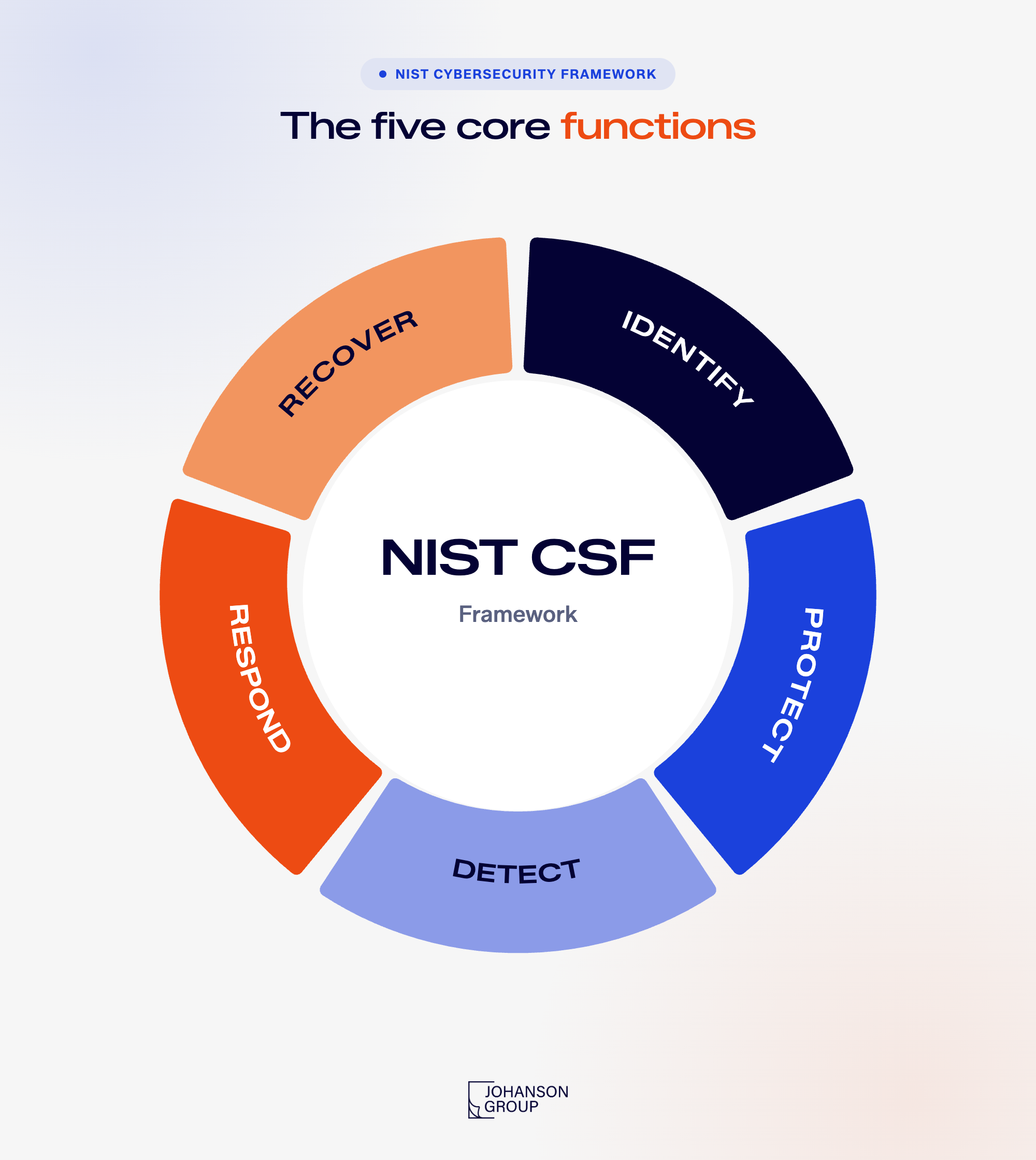
- Identify
- Protect
- Detect
- Respond
- Recover
The NIST Cybersecurity Framework is organized in a hierarchical fashion that allows organizations to begin with the lowest level of protection possible and then move up as needs change over time.
In addition to providing a path for organizations to improve their security posture, the NIST Cybersecurity Framework also offers resources that can be used by individual employees to help them understand how they can take steps toward greater security on their own time.
Read more about the history of the NIST Cybersecurity Framework (CSF)
- Obama’s Cybersecurity Executive Order: What You Need to Know
- Trump’s Cybersecurity Executive Order: 4 Things You Need to Know
How NIST CSF Is Used
There are three major components to the system:
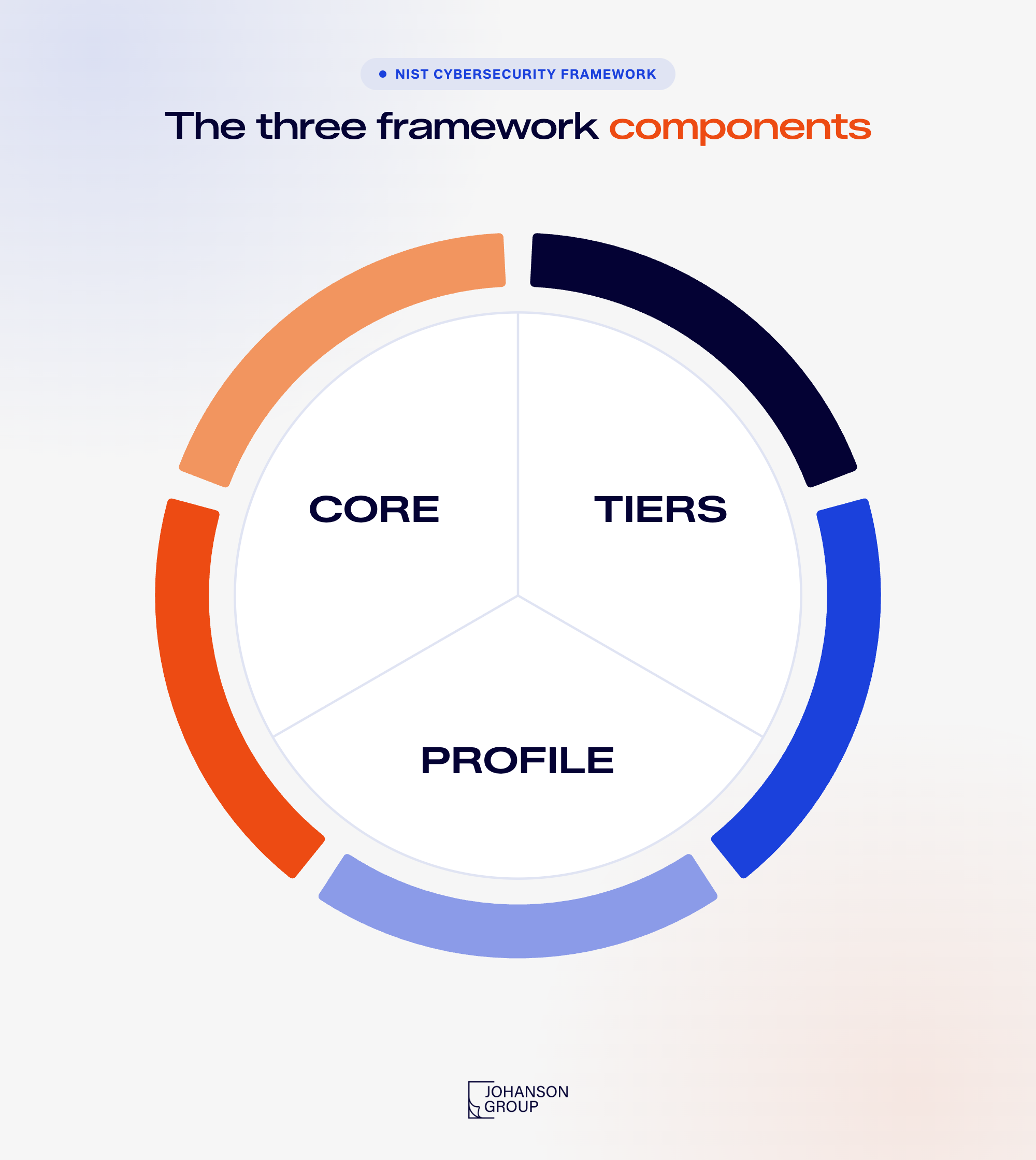
1) Framework Core:
This is the baseline of the NIST CSF and what everything else is built on. The five functions that make up this core mentioned previously ( Identify, Protect, Detect, Respond, and Recover) are used to identify and manage any risk management issues. The five core functions of cybersecurity contain 23 categories that provide the basic elements needed to establish a solid defensive strategy.
2) Implementation Tiers:
NIST CSF Tier levels provide benchmarks for organizations' cybersecurity efforts, with the highest tier (4) representing a strong adherence to the framework's rules and recommendations.
The four implementation tiers are:
- Tier 1: Partial
- Tier 2: Risk Informed
- Tier 3: Repeatable
- Tier 4: Adaptive
3) Profiles:
A profile at each tier allows you to gauge your current level of risk and see how improving your security measures can increase protection for everyone on the network.
When you have analyzed these three components, you can better understand the risk level of your system and identify any underlying problems. As such, you will be able to prioritize any issues and take action sooner rather than later.
Do you know how your cybersecurity defense efforts stack up against your competitors? Contact Johanson Group today to find out.
Now, before we get into NIST Cybersecurity Framework vs ISO 27001, here's a brief introduction to ISO 27001, so that you can better understand why it’s important for businesses looking to protect their data.
ISO 27001: An Overview
The ISO is an independent international body based in Geneva, Switzerland. It provides standards on a wide range of topics—including information security—to governments and businesses around the world.
First released in 2005, the 27000 standards are a family of corporate guidelines for information technology and security risk management.
ISO 27001 (aka ISO/IEC 27001:2013) is an information security risk management standard that specifies requirements for a comprehensive ISMS.
The basic goal of ISO 27001 protect your company and customer information with:
- Confidentiality: Only authorized persons may access data.
- Integrity: Only authorized individuals can modify the data.
- Availability: The information must be retrievable by authorized persons whenever they need it.
ISO 27001 is a process standard that outlines the steps needed to develop and maintain an ISMS. However, it doesn't include specific language on performing these tasks; you need other resources like the NIST SP 800-30 for guidance on how exactly do them (but not included in ISO 27001).
Learn more about the history of security audits here.
How ISO 27001 Is Used
So how does ISO 27001 work?
The standards here are meant to help businesses systemize their cybersecurity, growing a system that was put into place to cover certain issues into a full IT management system. You can get certification for compliance with ISO 27001, whether that's through the ISO themselves or a third-party auditor.
With ISO 27001, the scope can be limited to just one aspect of the company, rather than the company as a whole. For example, you could get certified just for your data center, or just for your cloud-based data storage—or any other aspect of your information technology (IT) systems.
When getting certified, you'll have to go through two stages:
Stage 1: Documentation review: Where your documents on processes, policies, and procedures will be audited. They will be looked at to ensure that they meet ISO standards.
Stage 2: Certification Audit: This will involve an auditor doing a full and thorough on-site assessment to ensure that your systems comply with ISO 27001 fully.
Wondering What the Difference is Between SOC 2 and ISO 27001? Find out!
ISO 27001 vs. NIST CSF: Key Differences
Now that you know the basics of NIST CSF and ISO 27001, if you want to improve and certify your cybersecurity systems, which one should you follow? Both of them are highly useful, and it just depends on what you need from them as a company.
Here are some of the key differences between them:
Risk maturity
The age and sophistication of your business's security system will help you decide here.
If you're just getting started with a comprehensive security program, then the NIST Cybersecurity Framework is likely to be a better fit for your organization.
For those that have a more mature system in place and need certification, ISO 27001 is going to be the way to go. This is because it's better at helping businesses mitigate issues such as data breaches.
Certification
For a cybersecurity system to be certified, it must conform with the ISO 27001 framework.
It's a valuable investment to hire an experienced risk management CPA for ISO 27001 audit, obtain your compliance certification and show stakeholders that you're taking cybersecurity seriously. NIST CSF is not a certification—it sets standards but doesn’t certify organizations against them.
Cost
ISO 27001 is a more advanced standard, so it charges for its documentation and other materials. NIST can provide you with good starting points for implementing an information security system and will be free of charge.
ISO 27001 vs NIST CSF: Similarities
Both ISO 27001 and NIST CSF are security frameworks that help organizations identify and mitigate risks. They are similar in that they both have the following elements:
• Risk assessment
• Risk treatment plan
• Corrective actions for non-conformities discovered during risk assessments
• Continuous improvement processes
Both frameworks also require organizations to have a documented security policy, which is one of the first steps in implementing both standards. Additionally, both frameworks require that organizations develop a Security Awareness Training Program (SATP) to educate employees on their roles in information security.
Can NIST CSF and ISO 27001 be Used Together?
Although you may want to choose one or the other when it comes to frameworks, sometimes combining them can be a good idea. The trick is figuring out why you'd want do that in your particular case.
A lot of new companies begin with NIST, as it allows them to get up and running without incurring any costs. However, they should consider ISO 27001—it's an international standard that's widely recognized by businesses across the world.
If they decide to move on to ISO 27001 compliance, certification will be much easier as they'll have done most of the work during NIST CSF implementation.
While there are advantages to implementing either of these two solutions, you can also benefit by using them in combination. You'll need to evaluate your options carefully so that you get the best possible security for your business needs.
Protect Your Business: Get a Risk Advisory CPA for Compliance and Data Breach Prevention—Here’s Why
As the world increasingly relies on technology, data security has become a top concern for businesses of all sizes. This is particularly true for SaaS startups and organizations that rely on Information Security Management Systems (ISMS) to protect sensitive information.
One way to ensure the security of your organization's data is to hire an experienced risk advisory Certified Public Accountant (CPA) who can conduct an ISO 27001 audit or NIST framework assessment.
Here are some reasons why this investment is worth it for your business.
1. Expertise in ISMS implementation
Implementing an ISMS can be a complex process, and having an experienced CPA on your team can be a great asset.
These professionals have the knowledge and expertise to guide your organization through the implementation process, ensuring that your systems are set up correctly and are aligned with industry best practices.
An experienced CPA can help you identify potential risks and vulnerabilities and develop mitigation strategies.
2. Compliance with international standards
Since ISO 27001 is an international standard for information security management, and the NIST is a framework developed by the US government to help organizations manage and reduce cybersecurity risks, compliance with these standards is crucial for businesses that handle sensitive information.
A risk advisory CPA can help ensure compliance with the new standards, lowering your organization's risk of a data breach or cyber attack.
3. Protection against financial loss
A data breach or cyber attack can be costly for any business, particularly for startups just getting off the ground.
According to a study by IBM, the average cost of a data breach is $4.24 million. This cost includes legal fees, regulatory fines, and lost business.
By investing in an experienced risk advisory CPA, you can reduce the risk of a breach or attack, potentially saving your business millions of dollars in the long run.
4. Improved reputation
A data breach can damage your organization's reputation, causing customers to lose trust in your business. This can result in lost business, decreased revenue, and difficulty attracting new customers.
By investing in an experienced risk advisory CPA, you can demonstrate to your customers that you take data security seriously, improving your reputation and increasing customer trust.
Are you forgetting SOC 2? Don’t! As a SaaS organization SOC 2 Compliance is crucial— Read more
Conclusion
Choosing the right compliance framework for your business is a critical decision that can significantly impact your organization's data security and overall success.
Both NIST and ISO 27001 offer comprehensive guidelines and standards for information security and data privacy, and choosing one over the other depends on your unique business needs, industry regulations, and the level of security you require.
By assessing your business's specific risks and compliance requirements, you can select the most appropriate framework that aligns with your objectives, budget, and resources.
Whichever framework you choose, remember that compliance is an ongoing process, and you must regularly review and update your security measures to maintain your organization's data integrity and protect your customers' sensitive information.
Ready to Get Started?
Ready to take the first step in protecting your business against cyber threats and ensuring compliance with industry regulations?
Contact Johanson Group today to schedule a consultation with our expert risk advisory specialists. Our team has extensive experience in navigating the ISO 27001 audit and compliance process, making it seamless and understandable for businesses of all sizes.
Relevant services


What is NIST 800-171?
What is NIST 800-171?
Securing sensitive information is a critical imperative for organizations. In the realm of government contracting, a specific set of security standards governs the protection of sensitive, yet unclassified, data. This blog post explores NIST Special Publication 800-171, a vital framework for safeguarding Controlled Unclassified Information (CUI).
What is NIST 800-171?
NIST SP 800-171, officially titled "Protecting Controlled Unclassified Information in Nonfederal Systems and Organizations," provides a set of guidelines for protecting government data that resides outside federal systems. The National Institute of Standards and Technology (NIST) developed these standards to ensure that non-federal entities, such as contractors and subcontractors, implement proper security controls. This framework mandates the protection of CUI to maintain data integrity and confidentiality.
What is Controlled Unclassified Information (CUI)?
Controlled Unclassified Information (CUI) is a category of data that requires protection but has not been classified for national security purposes. CUI includes a wide range of information, such as intellectual property, research data, financial details, and personal identifiable information (PII). A federal government agency or an authorized third party designates CUI. The CUI Registry provides a comprehensive list of CUI categories and subcategories. This designation ensures consistent handling and protection across various government and non-government systems.
Who Needs to be NIST 800-171 Compliant?
Any non-federal organization that processes, stores, or transmits Controlled Unclassified Information (CUI) on behalf of a federal government agency must comply with NIST 800-171. This requirement applies to a wide range of entities, including prime contractors, subcontractors, and other vendors in the federal supply chain. Compliance is often a contractual obligation for these organizations. Failure to comply can result in contract loss and other severe penalties.
List of NIST 800-171 Controls
NIST SP 800-171 outlines 14 security families, each containing a set of security requirements. These controls cover a broad spectrum of cybersecurity measures. Organizations must implement these controls to protect CUI. The 14 families include:
- Access Control: Limiting access to information systems and CUI.
- Awareness and Training: Ensuring personnel are trained in security protocols.
- Audit and Accountability: Creating and retaining system audit logs.
- Configuration Management: Establishing baseline configurations for systems.
- Identification and Authentication: Verifying the identity of users and devices.
- Incident Response: Developing a plan for handling security incidents.
- Maintenance: Performing timely and effective system maintenance.
- Media Protection: Protecting both physical and digital media.
- Physical Protection: Controlling physical access to systems and CUI.
- Personnel Security: Screening personnel with access to CUI.
- Risk Assessment: Periodically assessing risks to CUI.
- Security Assessment: Evaluating the security controls of information systems.
- System and Communications Protection: Monitoring, controlling, and protecting communications.
- System and Information Integrity: Protecting systems from malicious software and unauthorized changes.
How Johanson Group Can Help Achieve NIST 800-171 Compliance
Achieving NIST 800-171 compliance can be a complex process. Johanson Group specializes in guiding organizations through this intricate framework. Our experts provide a full suite of services, including gap analysis and other security framework audits. We offer comprehensive support to ensure your organization meets all the required security controls. The Johanson Group empowers your business to not only achieve but maintain compliance, safeguarding your data and securing your government contracts.
What is NIST 800-53?
What is NIST 800-53?
One of the cornerstones of cybersecurity standards is NIST 800-53, a framework developed by the National Institute of Standards and Technology (NIST). In this blog, we'll dive into what NIST 800-53 is, its purpose, the benefits it offers, and best practices for compliance.
What is NIST 800-53?
NIST 800-53, officially titled "Security and Privacy Controls for Federal Information Systems and Organizations," is a publication that provides a comprehensive set of security controls for federal information systems and organizations. It outlines security and privacy controls that federal agencies and contractors must implement to protect their information systems from various threats.
The Purpose of NIST 800-53
The primary purpose of NIST 800-53 is to provide a standardized set of guidelines for securing information systems within the federal government. By establishing a common baseline of security controls, NIST aims to enhance the security posture of federal agencies and ensure the protection of sensitive information from unauthorized access, disclosure, or modification.
The Benefits of NIST 800-53
Implementing NIST 800-53 offers numerous benefits for organizations, including:
- Risk Management: NIST 800-53 helps organizations identify and mitigate security risks by providing a structured approach to cybersecurity.
- Compliance: Adhering to NIST 800-53 ensures compliance with federal regulations and mandates, such as the Federal Information Security Modernization Act (FISMA).
- Enhanced Security: By implementing the recommended security controls, organizations can strengthen their cybersecurity posture and better protect their systems and data from threats.
- Interoperability: NIST 800-53 provides a common language and framework for cybersecurity, promoting interoperability and collaboration among federal agencies and their partners.
Who Needs to Comply with NIST 800-53?
NIST 800-53 compliance is primarily mandated for federal agencies. However, its principles are applicable and beneficial for any organization handling sensitive information, spanning across industries such as healthcare, finance, and technology. Therefore, while originally intended for government entities, NIST 800-53's influence extends to a broader spectrum of organizations aiming to fortify their cybersecurity posture.
Three Classes of Information Systems in NIST 800-53
NIST 800-53 categorizes information systems into three classes:
- Low-Impact Systems: Systems where the loss of confidentiality, integrity, or availability could have a limited adverse effect.
- Moderate-Impact Systems: Systems where the loss of confidentiality, integrity, or availability could have a serious adverse effect.
- High-Impact Systems: Systems where the loss of confidentiality, integrity, or availability could have a severe or catastrophic adverse effect.
NIST 800-53 Controls
NIST 800-53 encompasses 20 security control families, each addressing specific aspects of cybersecurity. These families include:
- Access Control
- Awareness and Training
- Audit and Accountability
- Configuration Management
- Contingency Planning
- Identification and Authentication
- Incident Response
- Maintenance
- Media Protection
- Personnel Security
- Physical and Environmental Protection
- Planning
- Program Management
- Risk Assessment
- Security Assessment and Authorization
- System and Communications Protection
- System and Information Integrity
- System and Services Acquisition
- Supply Chain Risk Management
- Privacy Controls
NIST 800-53 Compliance and Best Practices
Achieving compliance with NIST 800-53 requires a strategic approach and adherence to best practices. Here are three key steps to ensure compliance:
1. Analyze
The first step in achieving NIST 800-53 compliance is to conduct a thorough analysis of your organization's current security posture. This involves assessing existing security controls, identifying vulnerabilities, and determining gaps in compliance. By understanding your organization's specific security needs and challenges, you can develop a tailored approach to implementing NIST 800-53 controls.
2. Educate
Effective implementation of NIST 800-53 requires comprehensive training and education for all stakeholders involved in the security process. This includes IT staff, security personnel, and end-users. Training should cover topics such as the importance of cybersecurity, NIST 800-53 requirements, and best practices for compliance. By ensuring that all stakeholders are knowledgeable about their roles and responsibilities, organizations can minimize security risks and foster a culture of security awareness.
3. Assess
Regular assessment and monitoring are essential for maintaining NIST 800-53 compliance over time. Organizations should conduct periodic security assessments to evaluate the effectiveness of implemented controls, identify emerging threats, and address any deficiencies. Additionally, continuous monitoring of systems and networks can help detect and respond to security incidents in a timely manner. By staying vigilant and proactive, organizations can ensure ongoing compliance with NIST 800-53 and mitigate the risk of security breaches.
NIST 800-53 serves as a critical framework for enhancing cybersecurity within federal agencies and organizations. By understanding its purpose, benefits, and best practices for compliance, organizations can strengthen their security posture, mitigate risks, and protect sensitive information from evolving threats.

Who Needs ISO 27001 Certification?
Who Needs ISO 27001 Certification?
The protection of sensitive information has emerged as a critical imperative for organizations worldwide. With cyber threats becoming increasingly sophisticated, the need for robust information security measures has never been more pronounced. Enter ISO 27001 certification—a globally recognized standard that delineates best practices for establishing, implementing, maintaining, and continually improving an Information Security Management System (ISMS).
In this comprehensive guide, we delve deep into the realm of ISO 27001 certification, unraveling its intricacies, exploring its myriad benefits, and elucidating why it's an indispensable cornerstone for organizations seeking to fortify their security posture.
What is ISO 27001 Certification?
At its core, ISO 27001 certification serves as a testament to an organization's unwavering commitment to information security excellence. This certification provides a structured framework for identifying, assessing, and mitigating information security risks, thereby safeguarding the confidentiality, integrity, and availability of sensitive data.
By adhering to the stringent requirements outlined in ISO 27001, organizations can instill confidence among stakeholders, bolster their resilience against cyber threats, and demonstrate their dedication to maintaining the highest standards of information security.
Who Needs ISO 27001?
The applicability of ISO 27001 transcends industry boundaries, encompassing organizations of all sizes and sectors. Whether it's a small startup, a multinational corporation, or a government agency, any entity that handles sensitive information can benefit from ISO 27001 certification.
From financial institutions safeguarding transactional data to healthcare providers protecting patient records, the need for robust information security measures is ubiquitous. By obtaining ISO 27001 certification, organizations can proactively mitigate security risks, enhance their reputation, and gain a competitive edge in today's hyperconnected world.
Who Benefits from ISO 27001?
The benefits of ISO 27001 certification reverberate across various echelons of an organization and beyond:
- Executives and Management: Gain enhanced visibility into security risks and opportunities for improvement.
- IT Professionals: Leverage a structured framework for implementing and managing information security controls effectively.
- Customers and Stakeholders: Garner confidence in the organization's commitment to safeguarding sensitive information.
- Regulators and Compliance Bodies: Acknowledge adherence to internationally recognized security standards, facilitating regulatory compliance.
Which Industries Need ISO 27001 Certification?
While ISO 27001 is universally applicable, certain industries gravitate towards obtaining this certification due to the nature of their operations and the sensitivity of the data they handle. Industries that are inclined towards ISO 27001 certification include:
- Finance
- Healthcare
- Information Technology
- Telecommunications
However, in today's digital ecosystem, where data breaches can spell catastrophe for any organization, ISO 27001 is relevant across the spectrum.
8 Benefits of ISO 27001 Compliance:
- Boosting Customer Confidence:
- Demonstrates a commitment to safeguarding sensitive information, fostering trust among customers and stakeholders.
- Standing Out in the Market:
- Sets the organization apart by showcasing a proactive approach towards information security, enhancing its reputation in the market.
- Preventing Financial Losses:
- Mitigates the risk of data breaches and cyberattacks, thus averting potential financial losses associated with remediation, fines, and reputational damage.
- Meeting Legal Requirements:
- Ensures compliance with stringent data protection regulations such as GDPR, HIPAA, and CCPA, shielding the organization from legal repercussions.
- Compliance Readiness and Streamlining Audits:
- Provides a structured framework for managing information security, facilitating compliance readiness and simplifying audits and regulatory assessments.
- Strengthening Internal Security:
- Fosters a culture of security awareness and accountability, bolstering internal security mechanisms and minimizing the risk of insider threats.
- Aligning Objectives:
- Encourages alignment between business objectives and security goals, ensuring a holistic approach towards risk management and resource allocation.
- Peace of Mind:
- Offers invaluable peace of mind, knowing that robust security measures are in place to safeguard sensitive information, allowing organizations to focus on core business objectives.
Choose Johanson Group for ISO 27001 Certification
At Johanson Group, we recognize the paramount importance of information security. Our expert team is dedicated to guiding organizations on their journey towards ISO 27001 certification, providing tailored solutions to address their unique security challenges. By partnering with Johanson Group, organizations can fortify their defenses, instill trust among stakeholders, and embark on a trajectory of security excellence. Choose Johanson Group for ISO 27001 certification, and let's secure your organization's future together.
Services


